
www.auto-innovations.net
02
'26
Written on Modified on
Electrification of Heavy Goods Transport on Alpine Freight Corridors
MAN Truck & Bus and Dettendorfer Energy GmbH establish an initiative to deploy battery-electric fleets on the Brenner transit route.
www.man.eu
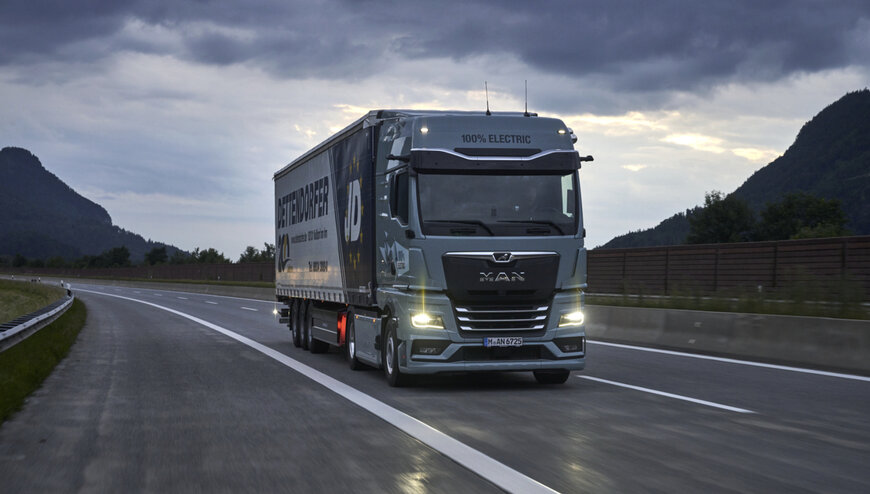
MAN Truck & Bus and Dettendorfer Energy GmbH, alongside industrial partners, have formed the "Initiative Green Brenner" to scale the deployment of battery-electric heavy-duty trucks along the Brenner alpine corridor. This technical cooperation establishes a low-emission road freight alternative and complementary framework to rail transport before the completion of the Brenner Base Tunnel.
Operational and Environmental Challenges in Alpine Transit
Heavy goods transit through narrow Alpine valleys faces strict constraints regarding carbon emissions, particulate matter, and acoustic pollution. To address these logistical and environmental challenges, cooperating across vehicle manufacturing and energy supply sectors is necessary to develop a viable zero-emission alternative to combustion-engine fleets.
Each deployed electric truck reduces carbon dioxide emissions by an average of 95 tonnes per year, evaluated against a baseline annual mileage of 110,000 kilometers. This transition addresses localized environmental degradation by eliminating tailpipe particulate emissions entirely and minimizing brake dust generation through alternative deceleration mechanisms.
Technical Parameters and Energy Recuperation Architecture
The technical solution relies on heavy-duty battery-electric trucks equipped with advanced regenerative braking systems. On alpine descents, the vehicles utilize recuperation mechanisms to convert kinetic energy back into electrical energy, recovering up to 40% of the power consumed during uphill climbs. This system design directly lowers overall grid energy demand during round-trip operations.
Acoustically, the electric drivetrain yields a noise reduction of 12.6 dB during accelerated departure compared to conventional diesel vehicles, reducing perceived sound pressure levels by approximately half. Economically, the integration of these powertrains reduces overall energy costs by 40% under current market conditions. Combined with an 80% reduction in toll fees, the architecture yields a 20% reduction in the total cost of ownership over a three-year operational cycle.
Infrastructure Expansion and Corridor Deployment
The long-term scaling of the battery-electric fleet depends on expanding the localized digital infrastructure and grid capacity along the European transit corridor. Megawatt charging systems and high-capacity grid connections are required to support high-throughput commercial charging loops without destabilizing regional power distribution networks.
"The Brenner is a stress test for European freight transport. Until the completion of the Brenner Base Tunnel, e-trucks can make an important contribution to easing the burden," stated Dr. Frederik Zohm, Executive Board Member for Research and Development at MAN Truck & Bus.
"For logistics companies, practical viability is ultimately what counts. We are demonstrating that emission-free transport in the Alpine region is ecologically sound and economically attractive," explained Georg Dettendorfer, Managing Director of Dettendorfer Energy GmbH.
Applications and Future Freight Integration
The primary application area focuses on road freight transport along the high-altitude transit corridor, serving traffic flows that cannot be immediately shifted to rail infrastructure. By collecting operational data from initial fleet deployments, the participating partners aim to optimize vehicle scheduling, charging cycles, and energy draw profiles. This systemic validation establishes a scalable blueprint for emission-free logistics across other topographically challenging transport routes in Europe.
Edited by Maria Brueva, Induportals editor – adapted by AI.MAN Truck & Bus and Dettendorfer Energy GmbH, alongside industrial partners, have formed the "Initiative Green Brenner" to scale the deployment of battery-electric heavy-duty trucks along the Brenner alpine corridor. This technical cooperation establishes a low-emission road freight alternative and complementary framework to rail transport before the completion of the Brenner Base Tunnel.
Operational and Environmental Challenges in Alpine Transit
Heavy goods transit through narrow Alpine valleys faces strict constraints regarding carbon emissions, particulate matter, and acoustic pollution. To address these logistical and environmental challenges, cooperating across vehicle manufacturing and energy supply sectors is necessary to develop a viable zero-emission alternative to combustion-engine fleets.
Each deployed electric truck reduces carbon dioxide emissions by an average of 95 tonnes per year, evaluated against a baseline annual mileage of 110,000 kilometers. This transition addresses localized environmental degradation by eliminating tailpipe particulate emissions entirely and minimizing brake dust generation through alternative deceleration mechanisms.
Technical Parameters and Energy Recuperation Architecture
The technical solution relies on heavy-duty battery-electric trucks equipped with advanced regenerative braking systems. On alpine descents, the vehicles utilize recuperation mechanisms to convert kinetic energy back into electrical energy, recovering up to 40% of the power consumed during uphill climbs. This system design directly lowers overall grid energy demand during round-trip operations.
Acoustically, the electric drivetrain yields a noise reduction of 12.6 dB during accelerated departure compared to conventional diesel vehicles, reducing perceived sound pressure levels by approximately half. Economically, the integration of these powertrains reduces overall energy costs by 40% under current market conditions. Combined with an 80% reduction in toll fees, the architecture yields a 20% reduction in the total cost of ownership over a three-year operational cycle.
Infrastructure Expansion and Corridor Deployment
The long-term scaling of the battery-electric fleet depends on expanding the localized digital infrastructure and grid capacity along the European transit corridor. Megawatt charging systems and high-capacity grid connections are required to support high-throughput commercial charging loops without destabilizing regional power distribution networks.
"The Brenner is a stress test for European freight transport. Until the completion of the Brenner Base Tunnel, e-trucks can make an important contribution to easing the burden," stated Dr. Frederik Zohm, Executive Board Member for Research and Development at MAN Truck & Bus.
"For logistics companies, practical viability is ultimately what counts. We are demonstrating that emission-free transport in the Alpine region is ecologically sound and economically attractive," explained Georg Dettendorfer, Managing Director of Dettendorfer Energy GmbH.
Applications and Future Freight Integration
The primary application area focuses on road freight transport along the high-altitude transit corridor, serving traffic flows that cannot be immediately shifted to rail infrastructure. By collecting operational data from initial fleet deployments, the participating partners aim to optimize vehicle scheduling, charging cycles, and energy draw profiles. This systemic validation establishes a scalable blueprint for emission-free logistics across other topographically challenging transport routes in Europe.
Edited by Maria Brueva, Induportals editor – adapted by AI.
www.man.eu
