
www.auto-innovations.net
03
'26
Written on Modified on
Software-Defined Commercial Vehicle Architecture for Fleet Digital Infrastructure
ZF Friedrichshafen AG collaborates with commercial vehicle manufacturers to integrate modular digital infrastructure and unified data interfaces into next-generation vehicle architectures.
www.zf.com
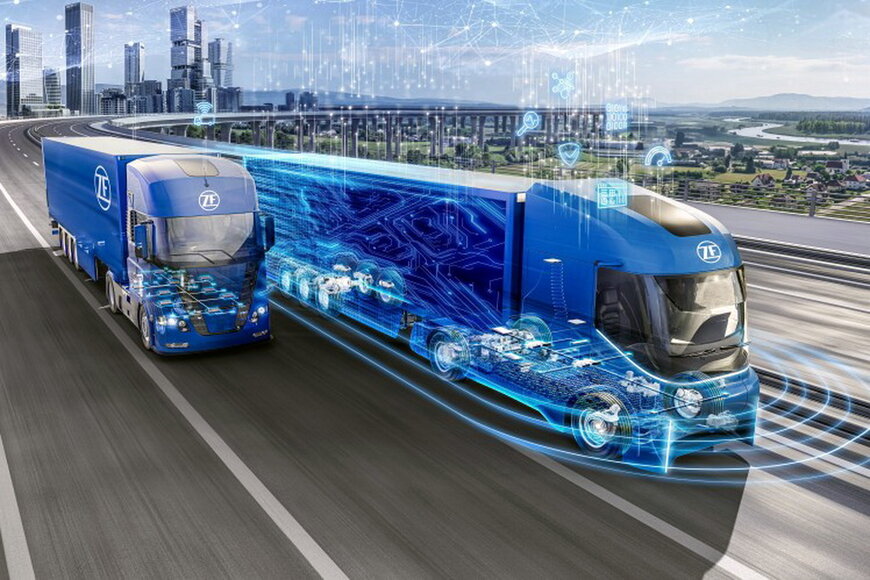
ZF Friedrichshafen AG is working alongside original equipment manufacturers (OEMs) to develop software-defined commercial vehicle architectures for freight transport and commercial logistics. The initiative establishes integrated digital infrastructure to streamline subsystem interaction across trucks, trailers, and logistics facilities.
System Complexity in Transport Operations
Commercial transport operators face increased system complexity driven by regulatory demands, cyber-security requirements, and heterogeneous onboard electronics. Distributed electronic control units (ECUs) complicate maintenance workflows and slow functional updates over the vehicle lifecycle. Addressing this architectural fragmentation requires collaboration between tier-one component suppliers and vehicle manufacturers to align hardware interfaces with service-oriented software architectures.
Technical Architecture and Interface Integration
ZF supplies the core control modules, edge computing interfaces, and cyber-secure diagnostic platforms, while OEMs integrate these packages into primary chassis platforms. The system framework utilizes a Software Update Management System (SUMS) compliant with automotive cyber-security standards to execute encrypted over-the-air firmware deployments. Onboard edge modules run condition monitoring through the ZF Health Check platform, tracking mechanical wear across the braking and electric driveline subsystems.
Data integration between tractor units and towed equipment is handled through the Truck Trailer Link (TTL) interface. This high-speed, bi-directional point-to-point communication channel replaces legacy physical connector assemblies. The physical- and data-link layers transmit trailer sensor telemetry — including tire pressure, axle load, and external camera video streams — directly to the primary in-cab vehicle control unit and advanced driver assistance systems (ADAS).
Operational Verification and Deployment
Implementation testing focuses on closed-loop commercial logistics environments. At internal testing facilities during technical validation exercises, ZF and partner OEMs deployed the SdCV Driver Terminal architecture. The proof of concept links in-cab controllers to terminal operating systems via short-range Bluetooth Low Energy (BLE) and local wireless networks. Verified functions include remote electronic park brake engagement, automated trailer coupling diagnostics, and localized chassis configuration without driver egress.
Expected Operational Impact
Coordinating software architecture across mechanical subsystems improves overall fleet uptime by transitioning maintenance regimes from scheduled intervals to predictive intervention. Unified truck-trailer networking reduces diagnostic times for combined vehicle faults. In logistics yards, automating connection routines and parameter verification reduces vehicle turnaround intervals while eliminating driver intervention during dangerous physical coupling operations.
Edited by Evgeny Churilov, Induportals Media - Adapted by AI.
www.zf.com
