
The Future of EV Battery Housings: Why Steel Is Challenging Aluminum
Matthias Grün of Purem by Eberspächer explains how steel, AI-driven development, and collaboration are transforming next-generation battery housing solutions for electric vehicles.
www.eberspaecher.com
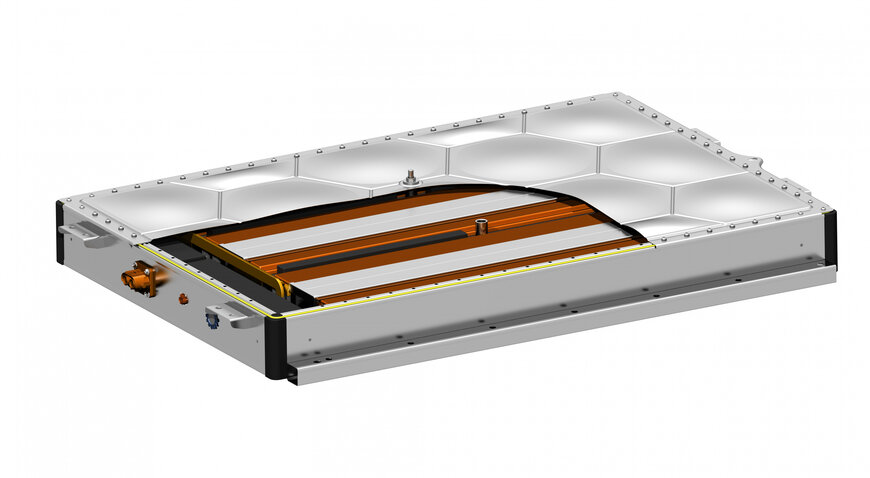
1. What are the biggest challenges automotive manufacturers face today when designing battery housing systems for electric vehicles?
The traction battery is at the heart of every BEV – and thus its housing. This must protect both cell modules and occupants, withstand high mechanical loads, and be as lightweight as possible. The challenges are manifold:
On the one hand, we as automotive suppliers face very diverse regulatory requirements and standards worldwide, which necessitate flexible and adaptable product development. At the same time, we must strike a balance between weight, cost, safety, and sustainability – all of these factors must be optimized simultaneously.
Added to this is the integration of new technologies, such as advanced thermal management and modern electronic components. This requires continuous innovation and constant adaptation of our production processes. It helps us that we can draw on the synergies among the Divisions of the Eberspächer Group – we have experts in thermal management and automotive electronics within the company and can leverage their expertise to optimize our products.
Until now, aluminum has been considered the standard here. Yet a nuanced look at the overall picture reveals: The material, supposedly without alternatives, has weaknesses – and high-strength steel offers compelling solutions.
2. From your perspective, what makes steel an attractive material for battery housings, particularly in terms of cost, safety, and sustainability?
The traction battery accounts for up to 40 percent of the total cost of an electric vehicle, making it the biggest cost driver. The significant price advantage of steel with a factor of three over aluminum enables the development of significantly more cost-effective steel solutions.
At the same time, the switch to steel has a positive impact on manufacturing costs as the material costs are significantly lower compared to aluminum. Processing steel requires less energy, and raw material prices are lower. The result is a housing with comparable weight and mechanical performance at significantly lower costs. For OEMs, this results in a twofold benefit: a more sustainable product at lower unit costs.
High-strength steel grades achieve significantly higher strength values than aluminum. The use of ultra-high-strength steel makes it possible to achieve a lower weight compared to aluminum, while allowing for the use of thinner wall thickness without compromising structural integrity.
In addition to its mechanical properties, the life cycle assessment is a particularly strong argument in favor of steel. Compared to aluminum, it has a lower carbon footprint. Added to this is significantly better recyclability: steel can be returned to the material cycle with virtually no loss. In times of increasing regulatory requirements, this advantage is becoming increasingly economically relevant.
We gained first successes already in Asia: We deliberately chose this region as our entry market because the electric mobility sector there is highly dynamic and OEMs are open to alternative material concepts. We were able to immediately leverage our expertise in material processing and welding processes – which we have built up over decades in exhaust and acoustic technology. The result is customer nominations from Chinese manufacturers and the start of series production in the second half of 2026. For us, these nominations are proof that the steel approach is convincing not only technically but also commercially. This success forms the foundation for our market entry in Europe. We can offer European OEMs a proven series-production product – including validated manufacturing processes.
3. What inspired the formation of the new consortium, and what are you hoping to achieve through this collaboration?
As co-founders of the consortium, we aim to virtually develop and validate a lightweight stainless steel battery housing as part of a concept study. The objective is to explore the technical boundaries and to further reduce costs and weight through targeted measures. The key advantage of this approach is that the usage of stainless steel eliminates the need for additional corrosion protection. This reduces manufacturing steps and costs.
4. One of the consortium’s goals is to develop stainless-steel battery housings that are both crash-resistant and more cost-effective. What are the key innovations making this possible?
Requirements concerning crash safety are high. This is why we are working on a housing structure that combines maximum crash safety with cost optimization through targeted reinforcements using special profiles.
Additionally, the use of stainless steel completely eliminates corrosion risks. By eliminating these process steps, we have further improved our CO₂ footprint. The elimination of protective coatings also reduces costs in logistics and transport protection – another significant advantage throughout the entire value chain.
A central aspect of our further development is the targeted use of artificial intelligence. In collaboration with an experienced development service provider, we will implement an innovative tool that enables us to convert our customers' individual requirements into series-ready product designs in just a few clicks. This approach significantly reduces simulation times while simultaneously lowering the necessary development investments. Our customers benefit from fast, transparent results regarding costs, schedules, design, and optimization options. With this smart solution, we elevate our expertise to a new level and offer genuine added value that far exceeds classical development processes.
5. Looking ahead, how do you see this collaborative approach shaping the next generation of battery housing solutions for the automotive industry?
In close collaboration between the consortium and Purem by Eberspächer, forward-looking solutions were developed to meet current and future requirements. The next step will be to implement an AI-powered development tool that reduces both development costs and development time.
Following customer nominations, the successful series launch of Purem by Eberspächer steel battery housings in Asia paves the way for a broader market launch in Europe. Our successes demonstrate that solutions made of steel and stainless steel are not only viable alternatives but also embody the future of battery housing design.
About the Speaker:
Matthias Grün works as Senior Manager Electric Solutions at Purem by Eberspächer in Esslingen am Neckar near Stuttgart. He holds a degree in engineering and is responsible for innovation management in the automotive sector.
www.purem.com
