
www.auto-innovations.net
28
'26
Written on Modified on
Evaluation of Hybrid-Electric Heavy-Duty Logistics Operations
BMW Group and DHL Group implement hybrid-electric vehicles and advanced charging infrastructures to optimize heavy-duty transport and supply chain operations.
www.bmw.com
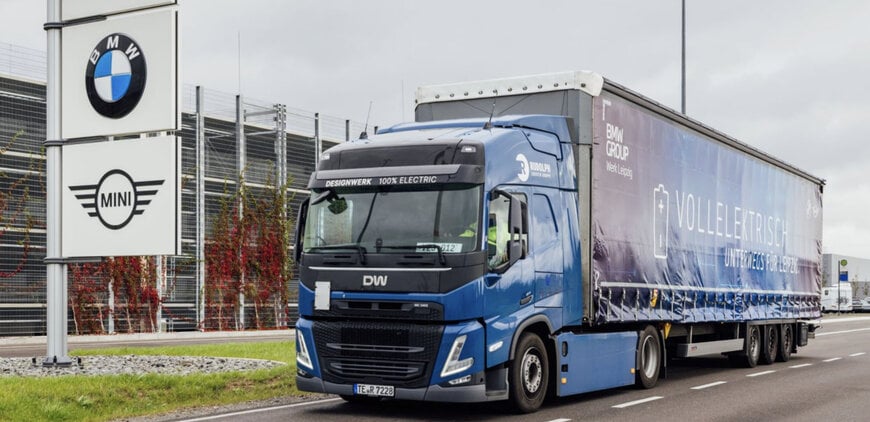
The BMW Group and the DHL Group are cooperating to evaluate a hybrid-electric truck within day-to-day industrial logistics operations. The initiative integrates a 40-tonne commercial vehicle equipped with an electric powertrain and an onboard range extender for long-distance transport applications.
Applications and technical use cases
The primary application targets heavy-duty industrial logistics and supply chain management within the automotive manufacturing sector. Concrete technical use cases include the transportation of production components between logistics facilities and manufacturing plants, as well as the execution of long-distance freight operations. The resulting operational benefits encompass the reduction of local emissions, decreased noise levels in the vicinity of the facilities, and the stabilization of schedule reliability during unpredictable load plan variations.
Industrial challenge and technical cooperation
The industrial supply chain faces the operational challenge of maintaining reliable heavy-duty transport performance on long or unpredictable routes where continuous charging infrastructure is not yet fully available. To address these parameters, the BMW Group and the DHL Group established a cooperation to test alternative propulsion systems under real-world conditions. The BMW Group defines the logistical requirements and operates the plant infrastructure, while the DHL Group manages the physical deployment of the vehicle on key transport routes.
Technical solution and system architecture
The technical solution centers on a 40-tonne hybrid-electric truck driven exclusively by a 230-kW electric motor. Energy is stored in a 416-kWh battery system. To address extended range requirements, a 120-kW combustion engine functions as an onboard generator to supply electricity when battery levels decrease. This engine does not drive the wheels directly. This technical configuration ensures continuous operation without reliance on external charging stations during transit, providing an effective range of 650 to 800 kilometers.
Deployment and infrastructure integration
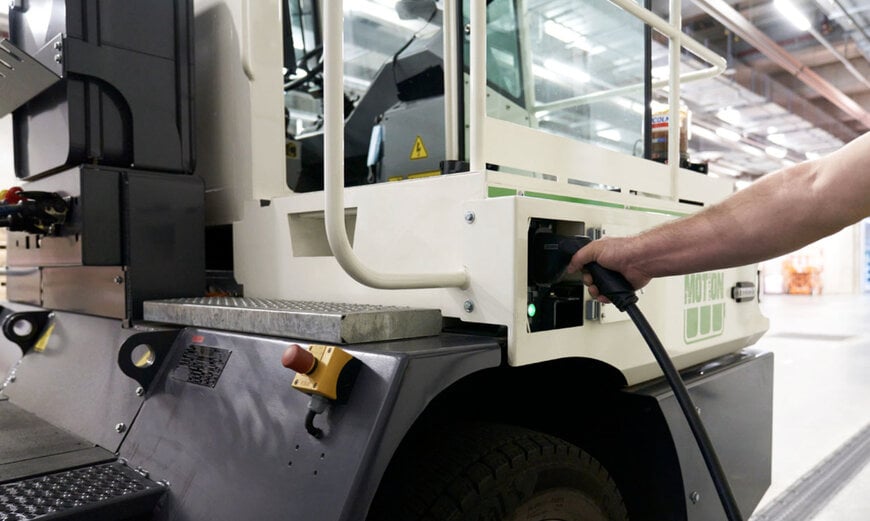
The hybrid-electric vehicle is deployed in active logistics operations, including the 600-kilometer transport route between Berlin and Munich, as well as on regional day-long routes in the Munich area. Parallel to this, the BMW Group operates fully electric trucks for plant intralogistics at its Regensburg and Leipzig sites. The integration of these vehicles is supported by specialized fast-charging infrastructure adapted for heavy-duty requirements. These charging stations utilize renewable energy to avoid lengthy operational interruptions and maintain continuous material flow.
Quantifiable impact on operations
Pilot operations demonstrate that the 40-tonne hybrid-electric truck can travel utilizing purely electric power for 80 to over 90 percent of its operating time, depending on the specific route profile. The combination of fully electric vehicles for predictable short-haul routes and range-extended vehicles for longer distances enables a structured integration of electric transportation into existing logistics processes, optimizing supply chain efficiency and reducing the overall environmental footprint of the transport operations.
Edited by Maria Brueva, Induportals editor – adapted by AI.
www.bmwgroup.com
