
www.auto-innovations.net
13
'26
Written on Modified on
Hydrogen Internal Combustion Engine Integration for High-Performance Mobility Systems
JCB, Prodrive, and Ricardo collaborate to deploy hydrogen internal combustion technology in a high-speed technical demonstrator to validate zero-emission industrial power solutions.
www.jcb.com
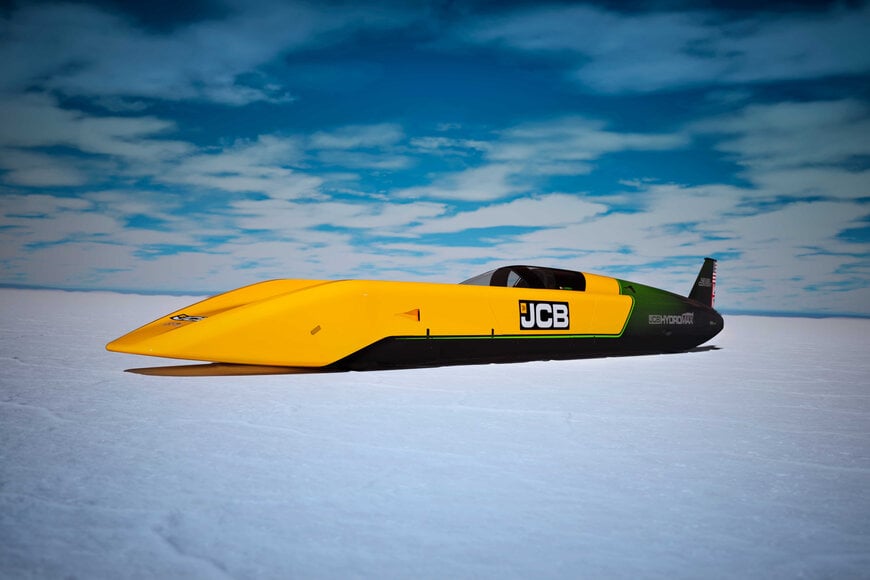
JCB is partnering with engineering consultancies Prodrive and Ricardo to develop and test the Hydromax, a 32-foot vehicle powered by hydrogen internal combustion engines (H2-ICE). This cooperation aims to demonstrate the operational viability and power density of hydrogen propulsion in demanding environments.
Context of the Technical Cooperation
The project addresses the industrial challenge of decarbonizing heavy-duty machinery where battery-electric solutions may face limitations in energy density and duty-cycle requirements. JCB has invested £100 million in H2-ICE development over five years, transitioning the technology from research to production-line implementation.
To bridge the gap between industrial application and high-performance validation, JCB is utilizing the specialized expertise of Prodrive for chassis engineering and Ricardo for advanced thermal management and engine calibration. This interdisciplinary approach is required to manage the complexities of high-speed stability and hydrogen fuel system integration.
Technical Architecture and Specifications
The Hydromax utilizes two production-based hydrogen internal combustion engines. These units are modified versions of the engines currently rolling off JCB’s production lines for industrial equipment. Key technical parameters include:
- Power Output: A combined 1,600 bhp.
- Fuel System: Hydrogen gas injected into the combustion chamber, utilizing spark ignition to achieve zero CO2 emissions at the exhaust.
- Architecture: A twin-engine configuration designed to test the robustness of the fuel delivery systems under extreme mechanical stress.
While the demonstrator is built for speed, the core engine architecture adheres to industrial standards, ensuring that the data gathered regarding combustion stability and cooling is applicable to industrial automation and heavy machinery.
Implementation and Operational Testing
The implementation phase involves preliminary testing in the United Kingdom followed by deployment at the Bonneville Salt Flats in Utah during August. The project follows a dual-track validation process:
Implementation and Operational Testing
The implementation phase involves preliminary testing in the United Kingdom followed by deployment at the Bonneville Salt Flats in Utah during August. The project follows a dual-track validation process:
- SCTA Verification: Testing during Bonneville SpeedWeek under Southern California Timing Association (SCTA) governance.
- FIA Certification: Formal world record attempts overseen by the Fédération Internationale de l’Automobile (FIA) to confirm performance metrics.
Technical Objectives and Impact
The primary objective is to exceed 350 mph, surpassing the standing diesel record and validating hydrogen as a high-performance alternative to fossil fuels. By deploying these engines in a land-speed vehicle, the partners aim to analyze the durability of the digital infrastructure controlling the fuel-air mixture at high velocities. Successful deployment serves as a proof-of-concept for the reliability of hydrogen engines in the global construction and agricultural sectors, providing a scalable pathway toward zero-emission heavy-duty transport.
Edited by Evgeny Churilov, Induportals Media - Adapted by AI.
www.jcb.com
The primary objective is to exceed 350 mph, surpassing the standing diesel record and validating hydrogen as a high-performance alternative to fossil fuels. By deploying these engines in a land-speed vehicle, the partners aim to analyze the durability of the digital infrastructure controlling the fuel-air mixture at high velocities. Successful deployment serves as a proof-of-concept for the reliability of hydrogen engines in the global construction and agricultural sectors, providing a scalable pathway toward zero-emission heavy-duty transport.
Edited by Evgeny Churilov, Induportals Media - Adapted by AI.
www.jcb.com
