
www.auto-innovations.net
12
'26
Written on Modified on
Hydrogen Combustion Powertrain Integration for High Output Operations
JCB and the Fédération Internationale de l Automobile have collaborated to validate high performance hydrogen combustion technology in extreme operational conditions.
www.jcb.com
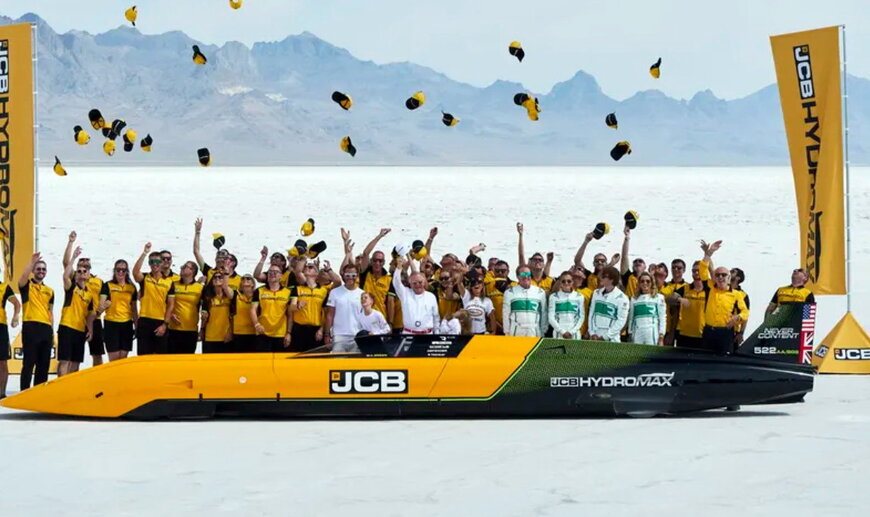
British equipment manufacturer JCB has demonstrated the operational limits of production based hydrogen internal combustion engines through an official Speed Record validation overseen by the Fédération Internationale de l Automobile. The technical project evaluates the combustion efficiency, structural integrity, and power density of heavy equipment engines under sustained maximum thermal and mechanical load.
The primary engineering challenge in adapting hydrogen internal combustion technology for industrial equipment involves managing rapid flame speed, high peak combustion pressures, and thermal stress while eliminating tailpipe emissions. To validate the viability of hydrogen engines for heavy duty industrial automation and off-highway machinery, severe testing under continuous high load conditions is required. JCB partnered with the Fédération Internationale de l Automobile to execute controlled testing protocols according to strict international regulatory standards.
The tested vehicle architecture incorporates two production based four cylinder hydrogen engines produced at the JCB facility in Foston, Derbyshire. The engines generate a combined output of 1600 brake horsepower, utilizing modified direct injection and forced induction systems to optimize the air hydrogen fuel mixture. The Fédération Internationale de l Automobile provided independent timing verification, technical regulations compliance, and safety framework administration under Category A, Group XIV, Class 7 parameters.
During testing at the Bonneville Salt Flats, the dual engine configuration achieved two bi-directional runs within a one hour window, recording an average speed of 406.320 miles per hour over a measured distance. Integration with standard engine control architectures demonstrated stable fuel delivery and thermal management across both powerplants. The data collected from high velocity runs directly informs the calibration of zero emission power units deployed in commercial earthmoving machinery.
The deployment of hydrogen combustion engines provides an alternative to battery electric systems in heavy industrial applications where continuous operational cycles, rapid refueling, and high power outputs are required. By utilizing existing internal combustion manufacturing infrastructure and engine block designs, the technical solution maintains supply chain compatibility while achieving zero carbon emissions at the point of use.
Edited by Evgeny Churilov, Induportals Media - Adapted by AI.
www.jcb.com
