
www.auto-innovations.net
17
'26
Written on Modified on
Exhaust Water Management Improves Fuel Cell Safety
Purem by Eberspaecher introduces De-Hydrator to reduce steam emissions and manage humidity in fuel cell vehicle exhaust systems.
www.eberspaecher.com
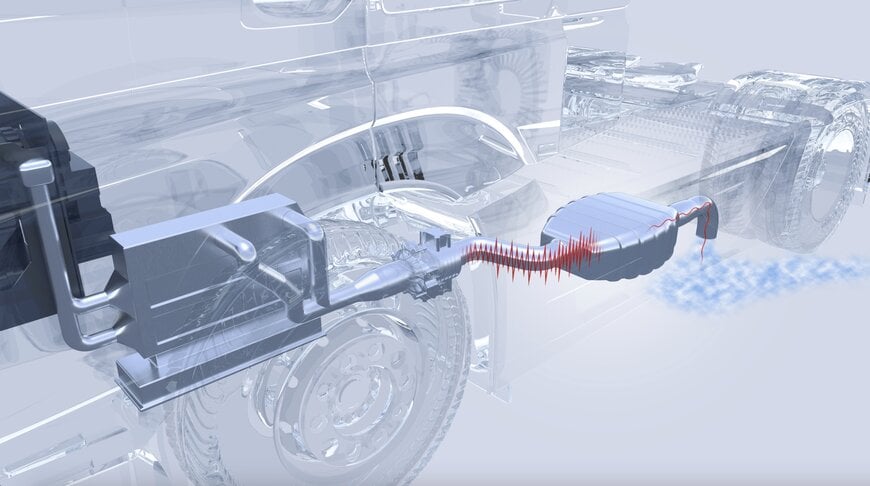
Image: Eberspächer
Purem by Eberspaecher has developed the De-Hydrator, a component designed to improve water management in fuel cell systems. The solution addresses visible steam emissions from exhaust air, which can affect safety and system performance in hydrogen-powered vehicles.
Managing steam formation in fuel cell systems
Fuel cells generate electricity through the reaction of hydrogen and oxygen, producing water vapor as a byproduct. Under certain conditions—such as low ambient temperatures or high humidity—this vapor can condense and create visible steam at the exhaust outlet.
This phenomenon has implications for road safety, particularly when dense steam clouds reduce visibility around vehicles. Effective control of exhaust humidity is therefore an important aspect of fuel cell system design.
Multi-stage process for humidity reduction
The De-Hydrator uses a multi-step process to reduce moisture content in exhaust air:
Purem by Eberspaecher has developed the De-Hydrator, a component designed to improve water management in fuel cell systems. The solution addresses visible steam emissions from exhaust air, which can affect safety and system performance in hydrogen-powered vehicles.
Managing steam formation in fuel cell systems
Fuel cells generate electricity through the reaction of hydrogen and oxygen, producing water vapor as a byproduct. Under certain conditions—such as low ambient temperatures or high humidity—this vapor can condense and create visible steam at the exhaust outlet.
This phenomenon has implications for road safety, particularly when dense steam clouds reduce visibility around vehicles. Effective control of exhaust humidity is therefore an important aspect of fuel cell system design.
Multi-stage process for humidity reduction
The De-Hydrator uses a multi-step process to reduce moisture content in exhaust air:
- Moist, warm exhaust air is mixed with cooled air through a heat exchange process
- Water vapor condenses into liquid form
- A separator removes the condensed water from the airflow
- Reheated air is reintroduced to reduce relative humidity in the exhaust stream
This process lowers the amount of visible steam released at the tailpipe, improving operational safety and consistency.
Integration within modular exhaust systems
The De-Hydrator is part of a broader modular exhaust air system designed for fuel cell applications. It can be adapted to specific vehicle requirements, supporting integration across different system architectures.
This modular approach allows manufacturers to combine noise reduction, water management, and airflow control within a single system, improving overall efficiency and simplifying system design.
Validation through testing and simulation
The component has undergone validation through both test bench and road trials, including collaboration with RWTH Aachen. These tests confirmed the effectiveness of the water separation and humidity control process under real-world operating conditions.
Development was supported by in-house simulation and testing capabilities, including a dedicated fuel cell test bench. This enabled optimization of airflow dynamics and component durability in line with automotive standards.
Supporting efficient hydrogen mobility systems
Effective exhaust water management contributes to the reliability and safety of fuel cell vehicles. By reducing visible emissions and controlling humidity, the De-Hydrator supports consistent system performance across varying environmental conditions.
Edited by Romila DSilva, Induportals Editor, with AI assistance.
Integration within modular exhaust systems
The De-Hydrator is part of a broader modular exhaust air system designed for fuel cell applications. It can be adapted to specific vehicle requirements, supporting integration across different system architectures.
This modular approach allows manufacturers to combine noise reduction, water management, and airflow control within a single system, improving overall efficiency and simplifying system design.
Validation through testing and simulation
The component has undergone validation through both test bench and road trials, including collaboration with RWTH Aachen. These tests confirmed the effectiveness of the water separation and humidity control process under real-world operating conditions.
Development was supported by in-house simulation and testing capabilities, including a dedicated fuel cell test bench. This enabled optimization of airflow dynamics and component durability in line with automotive standards.
Supporting efficient hydrogen mobility systems
Effective exhaust water management contributes to the reliability and safety of fuel cell vehicles. By reducing visible emissions and controlling humidity, the De-Hydrator supports consistent system performance across varying environmental conditions.
Edited by Romila DSilva, Induportals Editor, with AI assistance.
