
www.auto-innovations.net
18
'25
Written on Modified on
Keba optimises PV surplus charging with KeContact E10 Smart Energy Meter
The KeContact E10 smart energy meter optimizes PV surplus charging by dynamically managing load, preventing grid usage, and integrating seamlessly with KEBA wallboxes for efficient EV charging.
www.keba.com
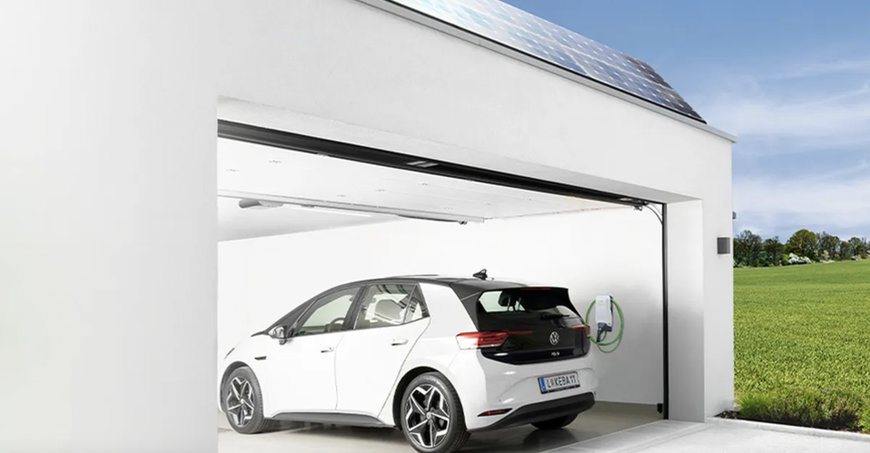
The use of self-produced solar power is a crucial step towards sustainable mobility. With PV surplus charging, excess electricity from your own photovoltaic system can be used directly to charge an electric vehicle—cost-efficient, independent, and environmentally friendly. In this article, you'll learn how PV surplus charging works, the different variants available, and why the KEBA complete system is the perfect solution for sustainable charging.
What is PV surplus charging?
PV surplus charging means that excess electricity from a photovoltaic system (PV system), which is not consumed in the household, is directly fed into the battery of an electric vehicle (EV). This method maximizes the use of self-produced solar power, saves grid electricity costs, and reduces the payback period of the PV system.
PV surplus charging is divided into three variants:
- Without Control:
- The technically simplest solution. The EV charges whenever it is plugged in, regardless of the current PV power production.
- Disadvantages: Requires manual control, may use grid power, and often leads to inefficient charging.
- Pure PV Surplus Charging via Release Signal:
- The inverter or a smart meter sends a release signal once a predefined PV surplus is reached (e.g., 3 kW).
- Advantages: Only PV power is used, no mixed operation with grid electricity.
- Smart PV Surplus Charging with Dynamic Control:
- Allows continuous adjustment of the charging power according to the current PV surplus. An intelligent wallbox such as the KEBA KeContact P30 PV EDITION or KeContact P40 communicates with an energy meter that measures household consumption.
- Advantages: Maximizes self-consumption, saves grid electricity, and is particularly efficient.

The optimal solution: KeContact E10 with intelligent control
The KeContact E10 is a smart energy meter that optimizes PV surplus charging through dynamic load management. It measures the electricity consumption of all household devices and detects the PV surplus, which is then directed to the electric vehicle.
The KeContact E10 is a smart energy meter that optimizes PV surplus charging through dynamic load management. It measures the electricity consumption of all household devices and detects the PV surplus, which is then directed to the electric vehicle.
- Advantages of the KeContact E10:
- Intelligent Grid Connection Monitoring: Tracks real-time electricity consumption and adjusts charging power based on available PV surplus.
- Seamless Integration: Works perfectly with KEBA wallboxes such as the KeContact P30 PV EDITION and KeContact P40.
- Efficient Usage: Charges the vehicle starting from as little as 1.4 kW PV surplus (in combination with the KeContact S10 phase switch).
- Dynamic Control: Prevents grid electricity usage when sufficient solar power is available.
- Complete package for PV surplus charging
KEBA offers a comprehensive set for PV surplus charging, consisting of:- KeContact E10: Smart energy meter.
- KeContact P30 PV EDITION or KeContact P40: Wallboxes with dynamic charging power adjustment.
- KeContact S10 Phase Switching Device (not required for KeContact P40): Enables single-phase charging starting from 1.4 kW PV surplus.
Conclusion: Sustainable and efficient charging
The combination of KeContact E10, KeContact P40 or KeContact P30 PV EDITION, and the optional KeContact S10 provides a powerful and sustainable solution for PV surplus charging. By dynamically adjusting the charging power, it maximizes the use of self-produced solar energy, reduces grid electricity costs, and helps protect the environment.
www.keba.com
The combination of KeContact E10, KeContact P40 or KeContact P30 PV EDITION, and the optional KeContact S10 provides a powerful and sustainable solution for PV surplus charging. By dynamically adjusting the charging power, it maximizes the use of self-produced solar energy, reduces grid electricity costs, and helps protect the environment.
www.keba.com
