
www.auto-innovations.net
14
'24
Written on Modified on
CERAMTEC LAUNCHES CERAMIC SUBSTRATE SINALIT SI3N4
CeramTec presented the new Si3N4 substrate Sinalit at PCIM Europe 2024 in Nuremberg, Germany.
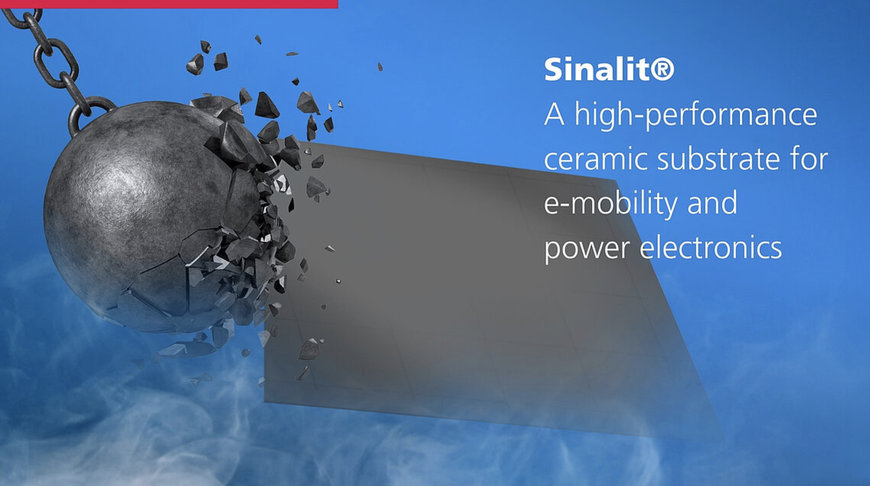
Silicon nitride is extremely robust and is characterized by a very high fracture toughness. This makes Sinalit® the perfect basis for high- performance electronics - for example for power modules in vehicle electrification and e-mobility. Source: CeramTec
Electric vehicles from car manufacturers are not only becoming more and more powerful, they are also becoming more and more individual and efficient. This applies equally to the individual components: As a result, many OEMs are turning to their own customer-specific power modules. With Sinalit®, ceramics expert CeramTec is now offering a new substrate based on silicon nitride (Si3N4) that makes individual solutions easy to implement. In the Power Module system, it impresses with its low weight, high power density and long service life. It is robust and can withstand adverse environmental conditions such as movement and pollutants. Another advantage: Sinalit® substrates can be produced very thinly. CeramTec also enables very tight external tolerances for customized power modules - ideal for confined installation spaces in electric or hybrid vehicles.
Optimally suited: Silicon nitride
Silicon nitride is characterized by a particularly high flexural strength of ≥ 700 MPa and a very high fracture toughness of ≥ 6 MPa√m. This makes silicon nitride extremely robust - and the substrate can be made particularly thin at 0.25 mm or 0.32 mm (other thicknesses on request). Another advantage of the substrate material is its good thermal conductivity (80 W/mK). Together with the low thickness of the substrate, this is important for quickly dissipating heat (reactive power) from power modules, for example. The extreme robustness enables manufacturers of power modules to use thick copper metallization of 1 mm on the Si3N4 substrate. This opens up new horizons for Active Metal Brazing (AMB) and Sputter Metal Bonding (SMB) applications that require robust and reliable performance. This enables maximum current levels to be achieved with limited voltage levels in electrified vehicles.
Three questions about the new Si3N4 substrate to Hans Ulrich Voeller, Senior Product Manager Substrates at CeramTec
1) What are the advantages of Sinalit® for customers in the automotive sector?
With the further development of electromobility and vehicle electrification, customers are increasingly looking for specific solutions: Everyone wants a power module tailored to their manufacturer DNA. With Sinalit®, we enable our customers to do just that: it is the perfect basis for customized power modules. They are no longer reliant on standard power modules.
2) What are other possible applications?
So far, Sinalit® is being used by pilot customers in the automotive sector. But it also offers opportunities for other sectors. For example, the renewable energy sector: When I think of wind power or photovoltaic systems, the long service life of the product and its lightweight construction are major advantages. Another possible area of application would be high-frequency technology. Polytetrafluoroethylene (PTFE) is a popular material here today due to its low dielectric constant and low loss factor. However, the EU is planning to ban PFAS/PTFE. Si3N4 ceramic is an environmentally friendly alternative with a low dielectric constant (+/- 8.3 at 1 Mhz) and a low dissipation factor (≤ 10−3at 1 Mhz).
3) What is the overall potential of the product?
When I look at the various possible applications, I see one thing very clearly: Sinalit® is an enabler for more diversity in solutions and more sustainability. The outstanding properties of silicon nitride can enable performance improvements in many areas and thus strengthen them. Whether in electromobility or new energies, I see this as a contribution to a successful energy transition.
Electric vehicles from car manufacturers are not only becoming more and more powerful, they are also becoming more and more individual and efficient. This applies equally to the individual components: As a result, many OEMs are turning to their own customer-specific power modules. With Sinalit®, ceramics expert CeramTec is now offering a new substrate based on silicon nitride (Si3N4) that makes individual solutions easy to implement. In the Power Module system, it impresses with its low weight, high power density and long service life. It is robust and can withstand adverse environmental conditions such as movement and pollutants. Another advantage: Sinalit® substrates can be produced very thinly. CeramTec also enables very tight external tolerances for customized power modules - ideal for confined installation spaces in electric or hybrid vehicles.
Optimally suited: Silicon nitride
Silicon nitride is characterized by a particularly high flexural strength of ≥ 700 MPa and a very high fracture toughness of ≥ 6 MPa√m. This makes silicon nitride extremely robust - and the substrate can be made particularly thin at 0.25 mm or 0.32 mm (other thicknesses on request). Another advantage of the substrate material is its good thermal conductivity (80 W/mK). Together with the low thickness of the substrate, this is important for quickly dissipating heat (reactive power) from power modules, for example. The extreme robustness enables manufacturers of power modules to use thick copper metallization of 1 mm on the Si3N4 substrate. This opens up new horizons for Active Metal Brazing (AMB) and Sputter Metal Bonding (SMB) applications that require robust and reliable performance. This enables maximum current levels to be achieved with limited voltage levels in electrified vehicles.
Three questions about the new Si3N4 substrate to Hans Ulrich Voeller, Senior Product Manager Substrates at CeramTec
1) What are the advantages of Sinalit® for customers in the automotive sector?
With the further development of electromobility and vehicle electrification, customers are increasingly looking for specific solutions: Everyone wants a power module tailored to their manufacturer DNA. With Sinalit®, we enable our customers to do just that: it is the perfect basis for customized power modules. They are no longer reliant on standard power modules.
2) What are other possible applications?
So far, Sinalit® is being used by pilot customers in the automotive sector. But it also offers opportunities for other sectors. For example, the renewable energy sector: When I think of wind power or photovoltaic systems, the long service life of the product and its lightweight construction are major advantages. Another possible area of application would be high-frequency technology. Polytetrafluoroethylene (PTFE) is a popular material here today due to its low dielectric constant and low loss factor. However, the EU is planning to ban PFAS/PTFE. Si3N4 ceramic is an environmentally friendly alternative with a low dielectric constant (+/- 8.3 at 1 Mhz) and a low dissipation factor (≤ 10−3at 1 Mhz).
3) What is the overall potential of the product?
When I look at the various possible applications, I see one thing very clearly: Sinalit® is an enabler for more diversity in solutions and more sustainability. The outstanding properties of silicon nitride can enable performance improvements in many areas and thus strengthen them. Whether in electromobility or new energies, I see this as a contribution to a successful energy transition.
www.ceramtec-group.com
