
www.auto-innovations.net
09
'26
Written on Modified on
NOx Sensors For Gasoline Vehicles EURO 7 Compliance
Schaeffler starts the serial production of NOx sensors for gasoline vehicles to ensure EURO 7 emission standard compliance and reduce overall system complexity.
www.schaeffler.com
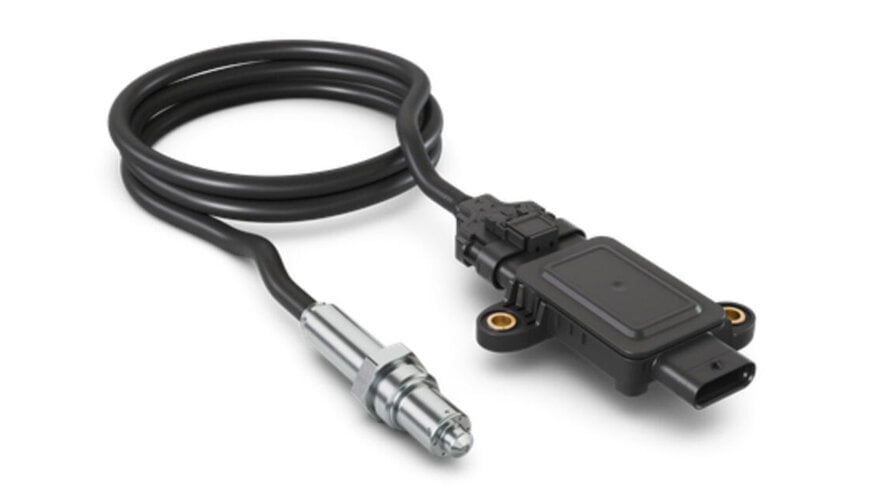
Schaeffler AG has launched the European serial production of its NOx sensors for gasoline vehicles. The technological sensor solution enables continuous monitoring and control of exhaust aftertreatment to meet upcoming emission standards in the automotive industry.
Emission Control Challenges
With the introduction of the EURO 7 standard, requirements for vehicle emission control are becoming significantly stricter. The new regulation demands not only compliance with limit values on the test bench, but also the recording of real driving emissions and the durability of aftertreatment systems throughout the entire vehicle lifecycle. For vehicle manufacturers, this means that the engine and exhaust aftertreatment must work together precisely and reliably under the most diverse operating conditions.
Technical Sensor Solution and Signal Processing
To master these regulatory requirements, the NOx sensor continuously records the actual amount of nitrogen oxides emitted by the vehicle during real-world driving. The component generates an electronic signal that correlates directly with the nitrogen oxide concentration in the exhaust gas, and additionally provides a lambda signal to determine the oxygen content. The combination of these two measured variables enables a precise real-time assessment of the exhaust gas condition over extended periods. Leif Reinhold, Head of the Powertrain Solutions business division at Schaeffler, explains that the sensor technology for gasoline vehicles 'builds technologically on our successful diesel variant' and creates the 'necessary transparency in the exhaust system' for a future-proof system design.
System Integration and Material Reduction
The generated sensor signals are used for the direct control of exhaust aftertreatment. The control system can thus react to dynamic changes in real time and regulate emissions under various operating conditions. Through this precise data monitoring, depending on the respective system architecture, the required catalytic converter size and the amount of precious metal used can be reduced. Furthermore, the need for additional lambda sensors is eliminated, which reduces the physical complexity of the overall system. Matthias Zink, CEO Automotive Technologies at Schaeffler AG, places the manufacturing within the strategic direction of 'offering vehicle manufacturers precise, intelligent, and scalable solutions for efficient and reliable emission control.'
Edited by Maria Brueva, Induportals editor - adapted by AI.
www.schaeffler.com
