
www.auto-innovations.net
08
'26
Written on Modified on
Advanced Electrification and Hydrogen Fuel Cell Mobility Architectures
Hyundai Motor Group presented multi-pathway electrification platforms and hydrogen fuel cell systems at Aachen Automotive Colloquium 2026 to optimize future mobility infrastructure.
www.hyundaimotorgroup.com
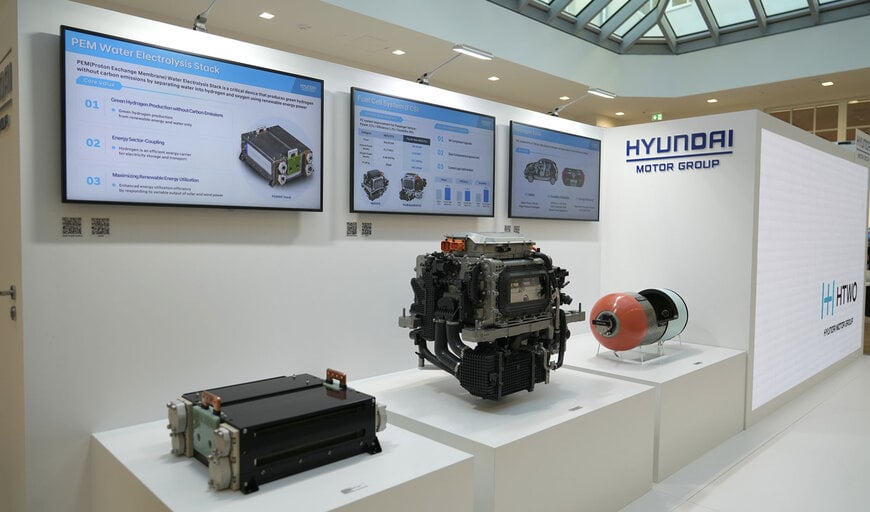
Hyundai Motor Group exhibited its advanced electrification architectures and hydrogen mobility systems at the Aachen Automotive Colloquium 2026, held from 5 to 7 October in Aachen, Germany. The event showcased multi-pathway vehicle platforms designed to integrate engineering intelligence with artificial intelligence across the commercial automotive and electric mobility sectors.
Core Technology and System Architecture
The technical exhibition centered on the multi-pathway xEV hardware, encompassing electric, hybrid, extended-range, and fuel cell electric vehicle platforms. The showcased physical architectures included a polymer electrolyte membrane water electrolysis stack, hydrogen storage tanks, and the NEXO fuel cell system. Additionally, the display featured high-density battery cells, a two-stage motor system, and a Transmission-Mounted Electric Device II hybrid transmission. To manage these hardware components, the system architecture utilizes a Data Flywheel framework, which continuously processes vehicle telemetry to refine product validation through digital twins and virtual simulation environments.
Deployment or Implementation
Implementation of these electrification technologies involves a structured convergence of artificial intelligence and digital engineering during the vehicle development lifecycle. The hydrogen fuel cell deployment strategy focuses on overcoming technical adoption barriers by scaling power conversion architectures across diverse market segments. During the technical presentations, engineering groups reviewed the integration of next-generation battery modules into existing manufacturing frameworks. Addressing the logic behind this integration, Manfred Harrer, President and Head of R&D Division at Hyundai Motor Group, stated, "How well we connect different mobility pathways to different customer realities. How successfully we connect engineering with artificial intelligence."
Industry Applications
The presented hydrogen and electrification platforms target the global automotive manufacturing sector and the digital infrastructure required for electric mobility. Concrete technical use cases include the integration of hybrid transmissions in passenger vehicles and the deployment of polymer electrolyte membrane water electrolysis for centralized hydrogen production and storage. Utilizing these multi-pathway architectures ensures that automotive manufacturers can maintain process stability and deliver adaptable mobility solutions that align with varying regional infrastructure capacities and specific transit requirements.
Operational Impact and Performance Metrics
The integration of AI-driven digital intelligence directly reduces system development cycles and enhances the maintainability of complex electric powertrains. Utilizing digital twins for virtual validation lowers engineering overhead and improves the long-term reliability of power modules before factory deployment. Furthermore, scaling these multi-pathway electrification technologies allows infrastructure operators to optimize energy consumption and support sustainable transit metrics across diverse vehicle classes.
Edited by Maria Brueva, Induportals editor – adapted by AI.
www.hyundaimotorgroup.com
