
www.auto-innovations.net
03
'26
Written on Modified on
Multi-Energy Vehicle Architectures and Digital Mobility Platforms
Stellantis presents the STLA One multi-energy platform and advanced concept vehicles at the Paris Motor Show to optimize automotive manufacturing architectures.
www.stellantis.com
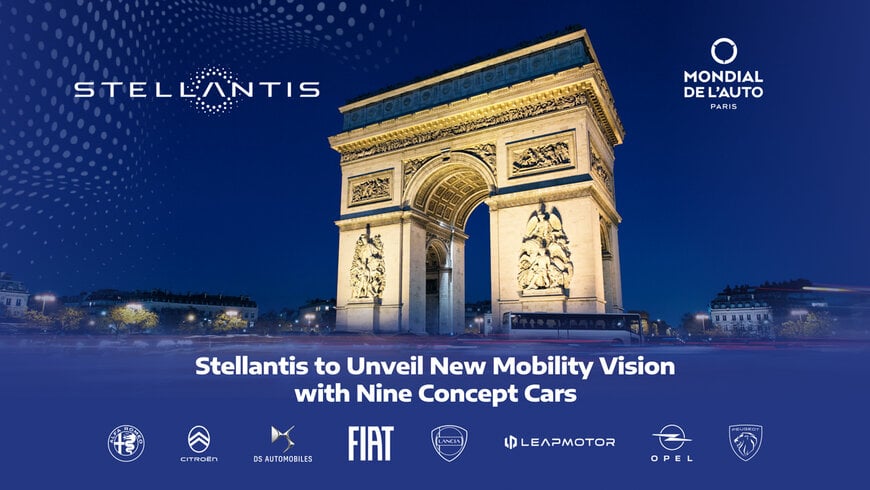
Stellantis presents its advanced multi-energy vehicle platforms and intelligent mobility architectures at the Paris Motor Show, taking place from 12 to 18 October at Porte de Versailles in Paris, France. The exhibition showcases integrated software and hardware solutions designed for the commercial automotive and electric mobility sectors.
Core Technology and System Architecture
The exhibition centers on the STLA One technology platform, a unified automotive architecture that integrates proprietary software, artificial intelligence, and multi-energy vehicle systems. Technical displays feature nine concept architectures and over 60 vehicles across multiple brands, demonstrating high-efficiency aerodynamic profiles and advanced electric drivetrain configurations. Specific hardware implementations include the DS N°7 premium compact SUV, engineered for hybrid and fully electric operations with a maximum operational range of 740 kilometers, and the Leapmotor B03 and D19 models, which integrate advanced connectivity and smart mobility control systems. Furthermore, Peugeot presents its Hypersquare steering control interface alongside the Polygon concept, focusing on ergonomic human-machine interfaces within the vehicle cabin.
Deployment or Implementation
Implementation of these automotive platforms occurs across the global manufacturing network of Stellantis, with specific production routing such as the Lancia Gamma crossover being developed and manufactured at the Melfi assembly plant in Italy. The integration phase involves utilizing the STLA One platform to standardize components across eight brands, allowing engineering teams to modularize powertrain deployments ranging from urban micro-mobility solutions to long-range transit vehicles. During the event, technical executives outline the deployment roadmap for integrating artificial intelligence into existing assembly frameworks to accelerate the speed at which new vehicle systems are validated and brought to market.
Industry Applications
The showcased vehicle architectures and multi-energy platforms target the global automotive manufacturing sector, public transportation networks, and electric mobility markets. Concrete technical use cases include the deployment of high-density battery systems in electric crossovers to meet extended range requirements, as well as the integration of intelligent connectivity protocols in modern fleet vehicles. By standardizing underlying software and hardware through a unified platform, automotive manufacturers achieve greater process stability, improved supply chain efficiency, and enhanced maintainability across diverse vehicle segments.
Operational Impact and Performance Metrics
The strategic deployment of the STLA One architecture directly reduces system development cycles and optimizes the scalability of multi-energy powertrain solutions. Consolidating engineering resources across brands such as Alfa Romeo, FIAT, and Opel ensures higher manufacturing efficiency while maintaining specific aerodynamic and performance parameters for each vehicle class. The integration of advanced aerodynamics and next-generation electrical technologies in models like the Lancia Gamma and DS N°7 lowers overall energy consumption, thereby supporting long-term sustainability metrics within complex mobility networks.
Edited by Maria Brueva, Induportals editor – adapted by AI.
www.stellantis.com
