
www.auto-innovations.net
15
'26
Written on Modified on
ACTIA at IAA Transportation 2026
From September 15 to 20, in Hannover, Germany, ACTIA is deploying a centralized software-defined computing architecture to streamline digital cockpits, safety systems, and fleet connectivity for commercial vehicle manufacturers.
www.actia.com
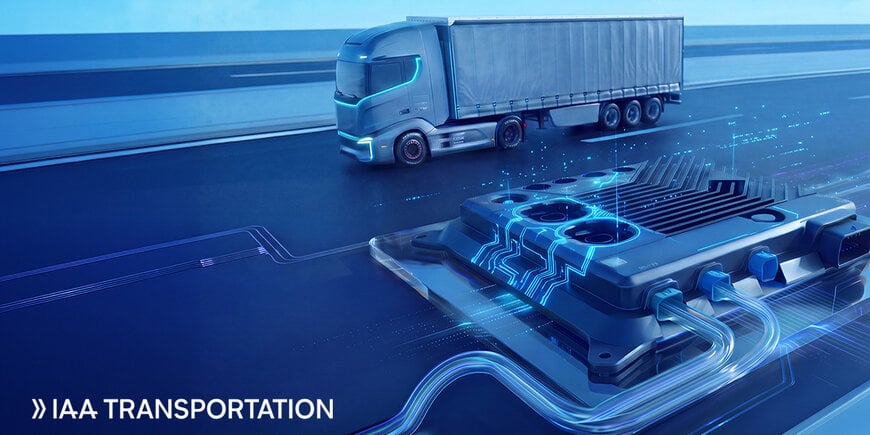
ACTIA is collaborating with commercial vehicle manufacturers to implement a centralized high-performance computing (HPC) platform for trucks, buses, and coaches. The system consolidates digital cockpit control, artificial intelligence (AI) vision processing, advanced driver assistance systems (ADAS), and fleet connectivity onto a single hardware unit.
Industrial Challenge and System Integration
Heavy vehicle manufacturing requires managing increasingly complex electronics while accelerating feature integration cycles. Traditionally, separate electronic control units (ECUs) governed distinct vehicle functions, resulting in integration bottlenecks, elevated wiring mass, and fragmented software lifecycles. By establishing a shared hardware and software baseline, ACTIA and original equipment manufacturers eliminate redundant platform development across vehicle model programs.
Technical Architecture and Separation of Domains
The system centers on a passively cooled, fanless HPC unit engineered to power four displays alongside diverse functional domains. The architecture isolates safety-critical driving operations from value-added digital services:
- Hardware virtualization and domain partitioning prevent non-critical applications from interfering with vehicle control systems.
- Sensor aggregation fuses multiple camera and sensor streams directly at the unit level to power AI vision functions, including blind-spot detection and moving-off information systems conforming to international vehicle safety standards.
- Dedicated interfaces run instrument cluster displays, human-machine interfaces (HMI), and digital rear-view systems simultaneously.
"The breakthrough is not only about computing power. It lies in the ability of a single platform to host, isolate and evolve multiple software domains. Combined with connectivity and FOTA, the HPC enables vehicles to continue improving long after delivery," states Xavier ESPAGNE, Solutions Portfolio Manager, ACTIA.
Implementation and Specific Use Cases
The integrated computing platform is demonstrated at the IAA Transportation trade show, held from September 15 to September 20, 2026, in Hannover, Germany. Implementation covers two principal vehicle configurations:
Implementation and Specific Use Cases
The integrated computing platform is demonstrated at the IAA Transportation trade show, held from September 15 to September 20, 2026, in Hannover, Germany. Implementation covers two principal vehicle configurations:
- Heavy-Duty Trucks: The platform aggregates peripheral camera feeds into a centralized 360-degree view, combining pedestrian detection alerts with vehicle-to-cloud telemetry.
- Buses and Coaches: In public transit architectures, the HPC processes operational analytics, automatic passenger counting, passenger infotainment feeds, and digital rear-view mirrors without requiring secondary onboard processors.
Operational Results and Post-Deployment Maintenance
Centralizing processing workloads into a single fanless enclosure reduces component failure rates and eliminates mechanical cooling maintenance. Operational scalability is maintained post-delivery through Firmware Over The Air (FOTA) updates. This capability allows fleet operators and vehicle makers to deploy regulatory compliance updates, cybersecurity patches, and operational feature upgrades without dispatching units to physical maintenance facilities, preserving vehicle uptime across long service lifecycles.
Edited by Evgeny Churilov, Induportals Media - Adapted by AI.
www.actia.com
Centralizing processing workloads into a single fanless enclosure reduces component failure rates and eliminates mechanical cooling maintenance. Operational scalability is maintained post-delivery through Firmware Over The Air (FOTA) updates. This capability allows fleet operators and vehicle makers to deploy regulatory compliance updates, cybersecurity patches, and operational feature upgrades without dispatching units to physical maintenance facilities, preserving vehicle uptime across long service lifecycles.
Edited by Evgeny Churilov, Induportals Media - Adapted by AI.
www.actia.com
