
www.auto-innovations.net
10
'26
Written on Modified on
Integration of Mirrorless Head-Up Displays for Automotive Applications
FORVIA HELLA and Distance Technologies collaborate to advance automotive digital infrastructure through space-efficient three-dimensional visualization systems.
www.hella.com
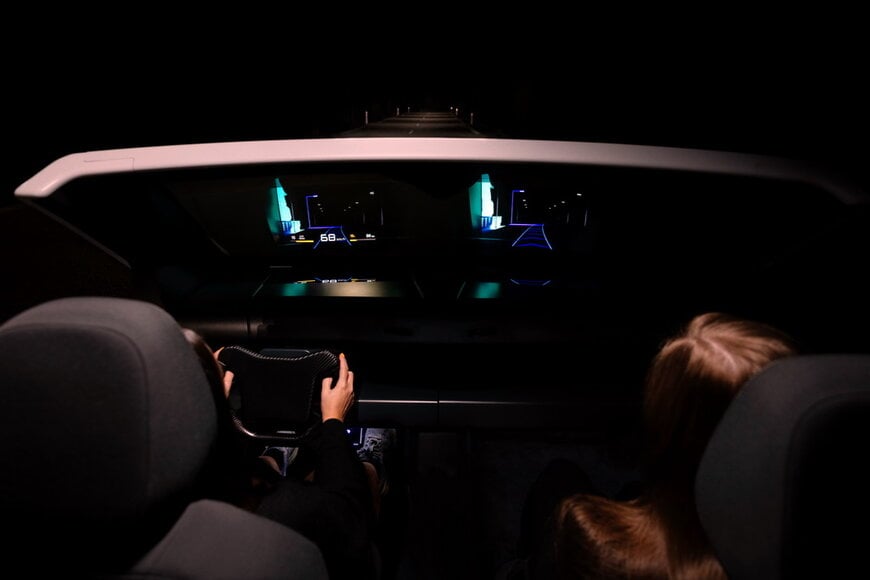
FORVIA HELLA and Distance Technologies have entered into a development partnership to engineer mirrorless three-dimensional augmented reality head-up display systems for vehicle integration. The project targets automotive manufacturing, focusing on driver assistance visualization and cockpit human-machine interfaces.
Industrial Challenge and Technical Division
Conventional head-up display units rely on complex interior mirror assemblies to project optical data onto the windshield. This approach demands considerable installation space behind the vehicle dashboard, restricting integration across diverse chassis platforms.
The cooperation combines the industrialization, vehicle electronics, and automotive lighting capabilities of FORVIA HELLA with the proprietary computational optics and three-dimensional light field technology of Distance Technologies. The Finnish software enterprise contributes artificial intelligence algorithms and embedded rendering architecture, while FORVIA HELLA directs optical hardware integration, manufacturing validation, and automotive qualification. HELLA Ventures supports the joint technical initiative.
System Architecture and Mechanism
The joint solution eliminates optical mirror arrays, replacing standard two-dimensional projection planes with a light field generation module. The system projects light rays that converge to form three-dimensional graphics directly aligned with the driver's focal depth.
- The optical module bypasses mechanical redirection assemblies, reducing package volume within the instrument panel.
- Embedded software superimposes navigational pathways, lane delineations, and road hazard indicators directly onto the road surface coordinate grid.
- The optical engine generates an expanded field of depth, allowing passengers to view discrete infotainment layers or video streams without driver optical interference.
- Software-defined display profiles allow original equipment manufacturers to reconfigure graphical layout parameters and projection boundaries without structural tooling modifications.
Operational Impact and Vehicle Integration
By reducing mechanical housing volume, the system facilitates integration into tight vehicle architectures where conventional mirror-based units cannot fit. Visual information aligns continuously with operational road conditions, minimizing the cognitive load required to refocus between instrumentation and physical surroundings. During highly automated driving modes, the display canvas extends to support direct communication feeds across the windshield area.
Technical evaluation focuses on aligning software update cycles with automotive electronic control unit architectures, establishing reproducible optical calibration standards for high-volume vehicle assembly lines.
Edited by Evgeny Churilov, Induportals Media - Adapted by AI.
www.hella.com
By reducing mechanical housing volume, the system facilitates integration into tight vehicle architectures where conventional mirror-based units cannot fit. Visual information aligns continuously with operational road conditions, minimizing the cognitive load required to refocus between instrumentation and physical surroundings. During highly automated driving modes, the display canvas extends to support direct communication feeds across the windshield area.
Technical evaluation focuses on aligning software update cycles with automotive electronic control unit architectures, establishing reproducible optical calibration standards for high-volume vehicle assembly lines.
Edited by Evgeny Churilov, Induportals Media - Adapted by AI.
www.hella.com
