
www.auto-innovations.net
07
'26
Written on Modified on
Vector Launches vSECC.InPlug to Extend DC Charging Range
Relocating communication into the connector enables 100-meter cable runs between vehicles and central power electronics.
www.vector.com
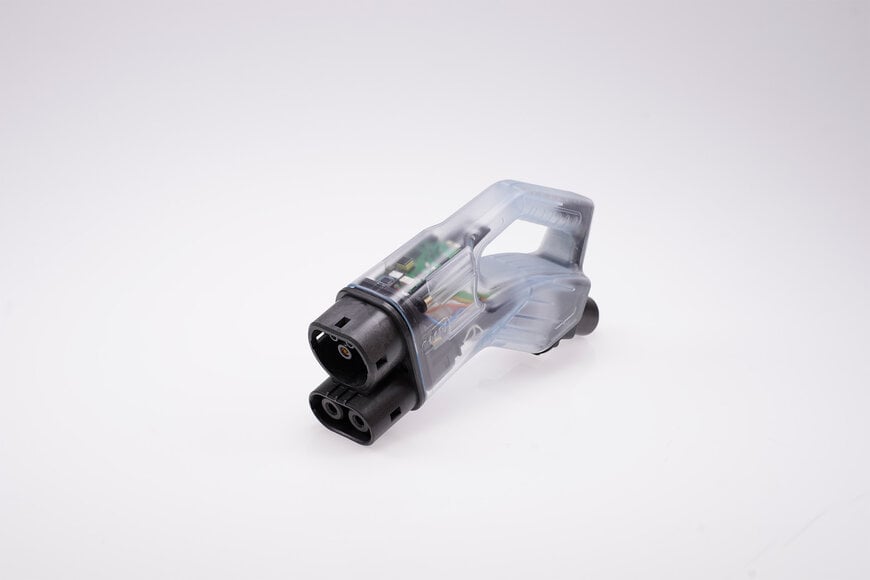
Vector has introduced vSECC.InPlug, an innovative communication controller board designed for commercial vehicle DC charging architectures. In conventional DC charging setups, high-frequency signal constraints typically limit the distance between the vehicle and the communication controller to approximately 7.5 meters. By embedding the primary communication interface directly inside the charging connector itself—developed in partnership with LAPP Mobility—vSECC.InPlug enables cable runs of up to 100 meters between commercial electric vehicles and centralized power electronics cabinets.
This decoupled architecture allows bus and truck depot operators to place slim, space-efficient charging dispensers directly at parking bays while consolidating bulky power converters and cooling systems in remote, centralized utility areas. The controller supports major international standards including IEC 61851, DIN SPEC 70121, ISO 15118-2, and ISO 15118-20. Alongside the hardware launch, Vector also announced vCharM.DMS, a depot management system that unifies vehicle telematics, parking space occupancy, maintenance schedules, and departure readiness into a consolidated operational overview. Both solutions will be presented at IAA TRANSPORTATION 2026 in Hanover.
Additional Context
This section provides technological and market background not explicitly detailed in the original release.
Megawatt and high-power DC fast charging for commercial fleets relies on Power Line Communication (PLC) modulated over the Control Pilot (CP) line, standard under ISO 15118 (HomePlug Green PHY). Over extended cable distances, these high-frequency PLC signals experience severe attenuation, cross-talk, and electromagnetic interference (EMI) generated by adjacent conductors carrying hundreds of amperes of direct current. Consequently, standard engineering practice has enforced a strict ~7.5-meter physical limit between the supply equipment communication controller (SECC) and the vehicle inlet. Vector's approach of placing the transceiver at the connector head isolates the sensitive PLC link to the final few centimeters of the interface. The longer 100-meter connection back to the power cabinet can then leverage noise-immune industrial protocols such as Ethernet or CAN bus. For depot planners, this resolves critical spatial bottlenecks, eliminating the need to install noisy, space-consuming liquid-cooled power cabinets directly adjacent to tight parking bays.
Edited by Lekshman Ramdas, Induportals editor – adapted by AI.
www.vector.com
