
www.auto-innovations.net
07
'26
Written on Modified on
iDBC System Launch: Integrated Braking from BWI Group
BWI Group introduces the iDBC 1-Box in Europe, an electro-hydraulic braking system that integrates actuation, stability control, and energy regeneration.
www.bwigroup.com
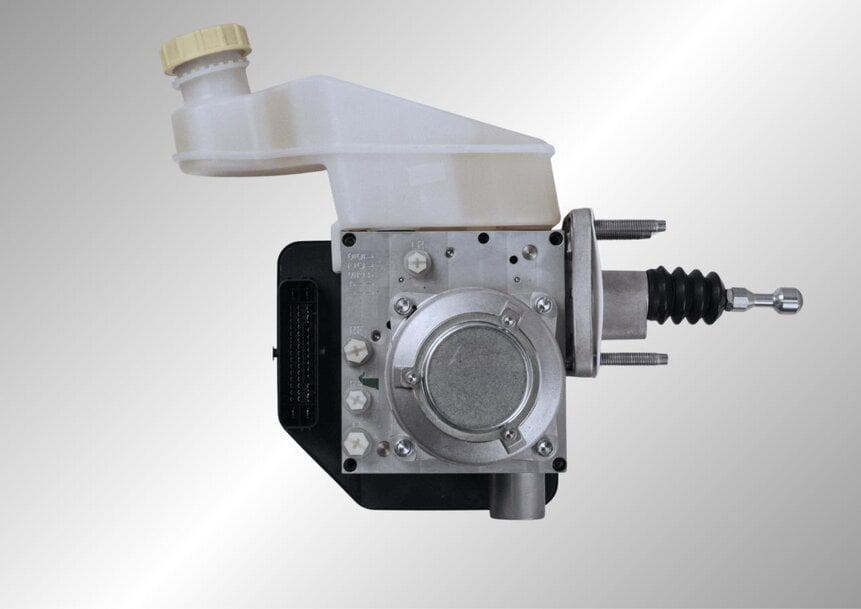
BWI Group has launched the Integrated Dynamic Brake Control (iDBC), a compact "1-Box" unit that replaces the conventional vacuum booster and brake actuator. This solution is engineered to support software-defined vehicle architectures by integrating brake actuation, stability control, and regenerative braking into a single software-controlled module.
Architecture and Operation
The iDBC utilizes a decoupled architecture where the brake pedal is not mechanically linked to the calipers.
- Input Sensors: A pedal travel sensor and pressure sensor transmit the driver's intent to the Electronic Control Unit (ECU).
- Pressure Generation: A motor within the pressure supply unit (PSU) generates the required hydraulic pressure, which is delivered three times faster than traditional vacuum-boosted actuators.
- Software Stack: BWI Group provides an in-house developed software stack covering stability functions (ABS, ESC, traction control), ADAS features (automatic emergency braking, adaptive cruise control), and regenerative braking algorithms.
Operational and Performance Benefits
This programmable subsystem offers several advantages for Original Equipment Manufacturers (OEMs):
This programmable subsystem offers several advantages for Original Equipment Manufacturers (OEMs):
- Customization: Pedal feel can be fully tuned to a specific brand's preference, while decoupling eliminates the pedal vibration typically felt during ABS activation.
- Energy Efficiency: The system enables seamless blending of regenerative and friction braking, maximizing energy recovery for EVs and hybrids.
- NVH Performance: The design improves overall Noise, Vibration, and Harshness (NVH) characteristics.
Safety and Validation
Designed to meet ASIL-D standards, the iDBC prioritizes fail-safe operation.
Designed to meet ASIL-D standards, the iDBC prioritizes fail-safe operation.
- Mechanical Backup: A direct hydraulic path between the brake pedal pushrod and the calipers serves as a final line of defense, ensuring the driver can stop the vehicle even if all electronic systems fail.
- Testing: The system has been validated across various conditions, including high- and low-temperature testing and a winter program on ice and snow in Arjeplog, Sweden.
