
www.auto-innovations.net
25
'26
Written on Modified on
Automated Adhesives Optimize EV Battery Assembly
Supporting the automotive data ecosystem, tesa integrates plasma surface treatments and dielectric bonding technologies to accelerate electric vehicle production workflows.
www.tesa.com
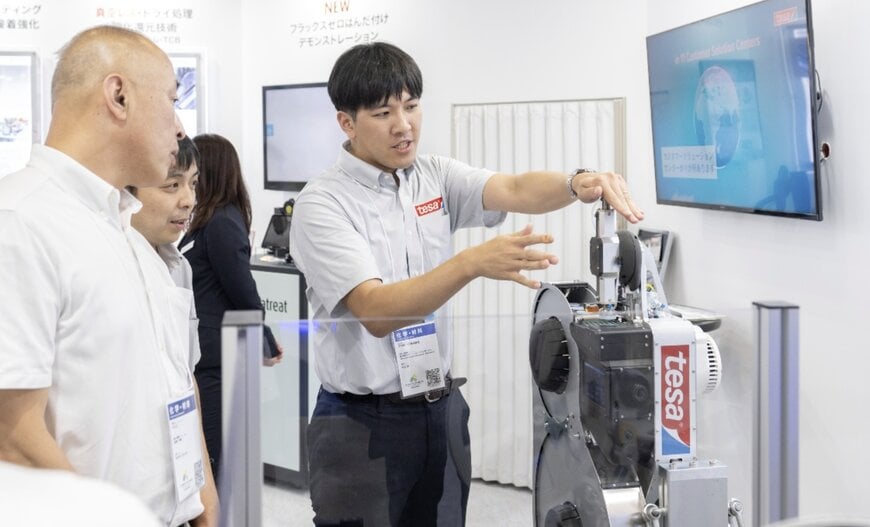
tesa showcased advanced adhesive tapes and automated structural sealing solutions for electric vehicle manufacturing at the Automotive Engineering Exposition 2026 in Yokohama and Nagoya, Japan. In cooperation with Nihon Plasmatreat, the deployment demonstrated how combining atmospheric pressure plasma technology with structural adhesives enhances surface wettability and bonding reliability in automotive paint shops and battery assembly lines.
Atmospheric Plasma Integration and Surface Activation
Modern electric vehicle architectures require robust bonding on low-energy or challenging substrates without relying on volatile chemical pretreatments. During the exposition, a live technical demonstration using atmospheric pressure plasma technology illustrated the modification of surface characteristics on automotive substrates. Plasma treatment increases surface energy and improves material wettability, creating optimal conditions for double-sided polyethylene (PE) foam tapes. This integrated surface preparation mechanism ensures consistent structural adhesion across varying materials, minimizing the risk of delamination in high-stress automotive environments.
Dielectric Cell Wrapping and Enclosure Sealing
As manufacturers scale electric mobility operations, automated adhesive applications are replacing traditional mechanical fasteners to manage weight and maintain electrical isolation. Dielectric and structural adhesive tapes are engineered specifically for prismatic and cylindrical cell wrapping. These materials prevent electrical discharge and support thermal management under high-voltage conditions. For enclosure integrity, the tesa ACXplus Box Seal provides a watertight barrier between the battery pack and the lid, protecting internal cell arrays from water ingress and chemical corrosion. Because the adhesive requires zero curing time, it integrates directly into robotic assembly processes, maintaining stable production throughput while remaining accessible for subsequent rework or maintenance.
Robotic Hole Covering and Mass Reduction
Optimizing body-shop processes requires reducing component weight and improving line repeatability. Integrating these automated materials into the digital supply chain allows manufacturers to track and control dispensing metrics accurately. The tesa ProSeal system replaces traditional mechanical plastic plugs with adhesive patches for automated hole covering in exterior, interior, and battery-area applications. By shifting from solid plastic plugs to structural adhesive patches, manufacturers achieve an 80 percent reduction in component mass while maintaining durable, corrosion-resistant coverage. The system is designed for high-volume automated lines, utilizing robot-compatible applicators and high-capacity cartridges to sustain long-run autonomy and continuous manufacturing efficiency.
Additional Context
This section details technical specifications and competitive benchmarking not included in the original news release.
In the automotive structural adhesive market, solutions are typically benchmarked against competitors like 3M and Henkel, which also supply dielectric tapes and automated sealing systems for battery manufacturing. Key performance indicators for these materials include dielectric breakdown strength (typically measured in kilovolts per millimeter), thermal conductivity, and lap shear strength. Furthermore, the shift from mechanical plastic plugs to adhesive patches is evaluated based on cycle time reduction and weight savings per vehicle. Automated tape applicators must operate within strict robotic payload and speed constraints, often requiring application speeds exceeding 150 millimeters per second to match the rapid cycle times of high-volume automotive production lines.
Edited by Aishwarya Mambet, Induportals Editor, with AI assistance.
www.tesa.com
