
www.auto-innovations.net
25
'26
Written on Modified on
Circular Interior Design Architectures for Automotive Door Panels
FORVIA has developed a recycled automotive door panel module for the JLR Cornerstone project to validate closed-loop interior manufacturing.
www.forvia.com
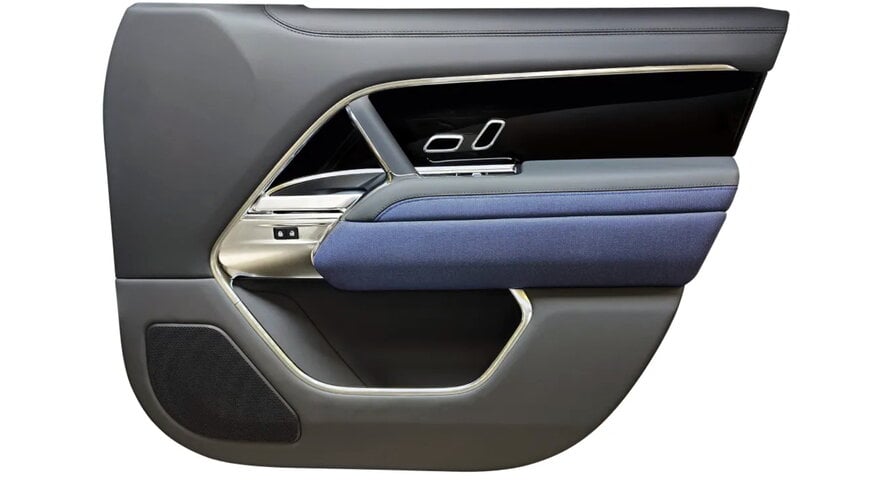
FORVIA Interiors and MATERI'ACT have collaborated to manufacture a circular automotive door panel for JLR's Cornerstone concept demonstrator, utilizing recycled vehicle materials in premium visible applications. This technical solution integrates advanced injection molding and part-integration processes with sustainable polypropylene compounds to address end-of-life recovery challenges in the automotive sector.
Material Composition and Emissions Performance Metrics
The engineering focus of the project centered on replacing traditional multi-material interior architectures with compatible polymers to optimize the recycling lifecycle. By implementing an IniCycled-P recycled polypropylene compound and a thermoplastic polyolefin polypropylene mono-material trim approach, the door panel achieves a measurable reduction in environmental impact compared to baseline reference components.
Quantitative analysis of the engineered door panel indicates that the total recycled content increased from 15% to 40% by weight. This material substitution, combined with design-for-disassembly principles, raises the calculated recyclability of the component from 11% to 58% at end-of-life. Furthermore, life cycle assessments of the manufacturing chain show that cradle-to-gate carbon dioxide emissions decreased from 580 to 277 kgCO2 per vehicle.
Process Integration and Industrial Scalability
Integrating high fractions of recycled polymers into visible cabin components requires specific modifications to industrial injection molding parameters. Recycled polypropylene compounds often exhibit variations in melt flow index and mechanical behavior compared to virgin resins. The compounding process developed for this application stabilizes these properties, ensuring that the final injection-molded parts meet standard premium automotive tolerances for surface finish, scratch resistance, and structural integrity under impact.
The assembly method eliminates polyvinyl chloride materials and focuses on mono-material-compatible architecture. Utilizing compatible polymer groups across the structural substrate, decorative trim, and functional attachments prevents material contamination during future shredding and separation processes. This approach ensures that materials salvaged from retired vehicles can be reprocessed into high-performance interior components rather than being downcycled into lower-grade industrial applications.
Additional Context
This section details technical specifications and competitive benchmarking not included in the original product announcement.
The automotive interior supply industry is increasingly moving toward mono-material components to comply with evolving European Union End-of-Life Vehicles regulations, which mandate higher rates of plastic recycling. Standard contemporary automotive door panels rely on complex multi-material layers, typically combining an acrylonitrile butadiene styrene substrate with polyurethane foam and polyvinyl chloride skins, making mechanical separation economically unfeasible.
In comparison, alternative industry approaches, such as those utilizing polyethylene terephthalate mono-materials for seating and door inserts, offer high recyclability but often face challenges in matching the rigid structural performance and impact requirements of large injection-molded structural substrates. The utilization of specialized polypropylene compounds, as seen in the IniCycled-P formulation, allows the component to maintain a tensile modulus and impact strength comparable to virgin glass-filled polypropylene while achieving a 52% reduction in cradle-to-gate carbon emissions. This positions the technology as a direct functional replacement for traditional multi-material interior assemblies without requiring significant modifications to standard injection molding machinery.
Edited by Evgeny Churilov, Induportals Media - Adapted by AI.
www.forvia.com
