
www.auto-innovations.net
15
'26
Written on Modified on
KAMOKA Launches Reliable Multi Plate Clutch Pumps For Better Traction
The new product line features 17 part numbers with stable pressure consistency and advanced pre-filtration to effectively restore vehicle drivetrain systems during professional workshop repairs.
www.kamoka.com
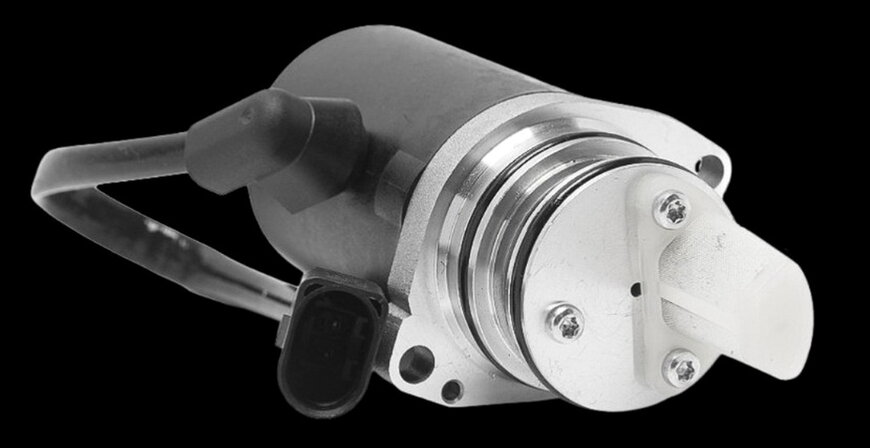
KAMOKA introduces a new line of multi-plate clutch pumps designed to restore torque distribution functionality in passenger and light commercial vehicles. This technology provides automotive service centers and component distributors with replacement parts engineered to maintain stable hydraulic pressure within selective four-wheel-drive systems.
Hydraulic Pressure Management in Torque Distribution
The multi-plate clutch pump serves as the primary component for generating hydraulic pressure within selectable four-wheel-drive systems. When the drivetrain electronic control unit detects wheel slip or variance in axle speeds, the pump activates to compress the clutch disc pack. This mechanism enables regulated torque transfer between the vehicle axles, directly influencing drivetrain stability and traction response under variable road conditions.
The product lineup consists of 17 distinct part numbers, including reference codes HP001 through HP005, covering a broad selection of specific vehicle applications.
Technical Specifications and System Durability
Operational consistency remains a critical metric for aftermarket hydraulic pumps. A deficiency or fluctuation in hydraulic output delays drivetrain engagement, causes incomplete clutch plate coupling, and triggers diagnostic trouble codes within the vehicle control module. To mitigate these risks, the components are engineered to deliver a consistent pressure profile across standard operating temperatures.
Drivetrain fluid degradation introduces fine particulates into the hydraulic circuit over time. To prevent internal wear, these pumps integrate a high-efficiency pre-filter designed to capture operational debris before it enters the pumping chamber, reducing the risk of flow restriction.
The internal seals are formulated from elastomers resistant to thermal expansion and chemical degradation caused by continuous exposure to transmission oil. Drivetrain fluid temperatures elevate during prolonged torque engagement, heavy vehicle loading, or low-traction operation. The seal composition ensures geometric stability under these thermal loads, preventing external fluid leaks and internal pressure loss.
Diagnostic Procedures and System Malfunctions
Pump degradation or mechanical failure manifests through specific diagnostic symptoms:
- Delayed or absent engagement of the secondary drive axle.
- System fault codes and illuminated all-wheel-drive warning indicators on the instrument cluster.
- Mechanical binding or jerking during vehicle acceleration from a standstill.
- Loss of traction, causing the vehicle to operate exclusively as a single-axle drive platform.
Comprehensive system diagnostics require reading the fault memory of the drivetrain control unit, testing electrical circuits for continuity, and assessing fluid quality. Technicians must verify the condition of the fluid and mechanical clutch wear, as contaminated oil or restricted filters produce symptoms identical to mechanical pump failure. Replacing an inefficient pump restores the necessary operating pressure to return the selectable all-wheel-drive system to its original performance parameters.
Additional Context
This section details technical specifications and competitive benchmarking not included in the original product announcement.
Multi-plate clutch pumps in modern on-demand all-wheel-drive platforms — predominantly based on Haldex generations II through V architectures — operate under precise electronic duty cycles. Standard OEM and premium aftermarket benchmarks require these hydraulic pumps to generate operating pressures ranging from 3.0 MPa to over 4.4 MPa (approximately 30 to 44 bar) depending on the system generation, with reaction times under 100 milliseconds.
While original equipment manufacturers rely on specific proprietary lubricants, premium aftermarket options must sustain internal seal integrity against high-shear transmission fluids at continuous operating temperatures reaching 100°C. Competitors in this segment frequently utilize fluorocarbon (FMC) or polyacrylate (ACM) elastomers to match original equipment lifecycle ratings, which typically exceed 100,000 kilometers under mixed driving cycles.
Edited by Evgeny Churilov, Induportals Media - Adapted by AI.
www.kamoka.pl
Additional Context
This section details technical specifications and competitive benchmarking not included in the original product announcement.
Multi-plate clutch pumps in modern on-demand all-wheel-drive platforms — predominantly based on Haldex generations II through V architectures — operate under precise electronic duty cycles. Standard OEM and premium aftermarket benchmarks require these hydraulic pumps to generate operating pressures ranging from 3.0 MPa to over 4.4 MPa (approximately 30 to 44 bar) depending on the system generation, with reaction times under 100 milliseconds.
While original equipment manufacturers rely on specific proprietary lubricants, premium aftermarket options must sustain internal seal integrity against high-shear transmission fluids at continuous operating temperatures reaching 100°C. Competitors in this segment frequently utilize fluorocarbon (FMC) or polyacrylate (ACM) elastomers to match original equipment lifecycle ratings, which typically exceed 100,000 kilometers under mixed driving cycles.
Edited by Evgeny Churilov, Induportals Media - Adapted by AI.
www.kamoka.pl
