
www.auto-innovations.net
29
'26
Written on Modified on
Pressure Sensors for Automotive Air Conditioning Systems
Bosch expands its pressure sensor portfolio for refrigerant circuits in internal combustion, hybrid, and electric vehicles.
www.bosch.com
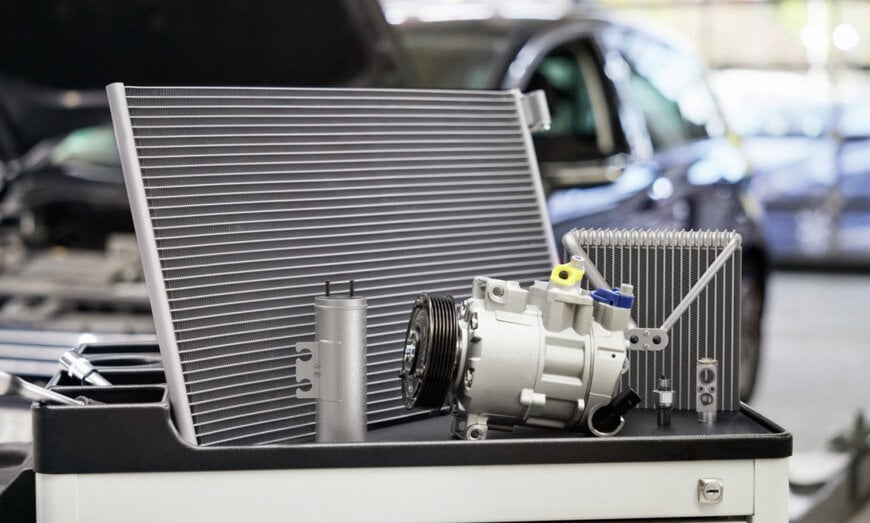
Bosch has expanded its portfolio of automotive air conditioning components with a new range of pressure sensors for refrigerant circuits. The European market launch is scheduled for the first half of 2026 and will initially include 60 product references, broadening the company’s aftermarket offering for HVAC components.
The new product range has been developed to support workshops in the maintenance and repair of HVAC (Heating, Ventilation, and Air Conditioning) systems by providing components designed to monitor and control refrigerant pressure in both high- and low-pressure circuits.
Pressure Monitoring for HVAC System Protection
Pressure sensors are essential components for the safe and efficient operation of vehicle air conditioning systems. Their function is to continuously measure refrigerant pressure and transmit data to the vehicle’s control systems. According to Bosch, accurate pressure monitoring helps optimize cooling performance and protect critical components such as compressors from operating conditions that could cause damage or reduce system service life.
By adding these components to its aftermarket portfolio, Bosch provides workshops with broader access to replacement parts for air conditioning system maintenance.
Coverage of the European Vehicle Fleet
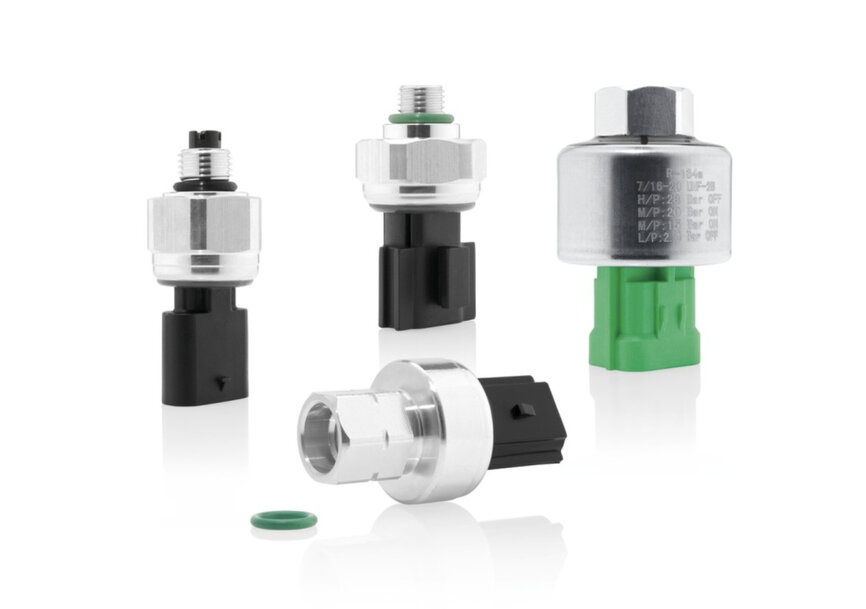
The new sensor family consists of 60 part numbers designed to cover a significant portion of the European vehicle fleet. To meet the requirements of modern HVAC architectures, Bosch offers versions compatible with internal combustion engine vehicles, hybrid vehicles, and battery-electric vehicles. The range includes both mechanical and electronic pressure sensors, as well as variants that integrate temperature measurement into a single component.
This broad product offering enables compatibility with a wide range of vehicle manufacturers and applications.
Quality Control and Operational Reliability
Before being added to the Bosch product portfolio, each pressure sensor undergoes pressure testing and leak-tightness verification to ensure proper operation within refrigerant circuits. According to the company, these procedures are intended to validate component durability under the operating conditions commonly encountered in automotive air conditioning systems and to ensure long-term reliability.
The testing process is designed to maintain performance stability and minimize the risk of refrigerant leakage.
Designed for Workshop Efficiency
During the development of the new sensor range, Bosch focused on the practical requirements of independent workshops and service networks. All pressure sensors are supplied ready for installation and include dedicated sealing rings. This configuration eliminates the need for additional components during replacement, reducing service time and simplifying maintenance procedures. Providing sealing elements together with the sensor also helps ensure a leak-tight refrigerant circuit after installation.
Additional Context: This section details technical specifications and competitive benchmarking not included in the original product announcement
The automotive HVAC aftermarket includes suppliers such as Denso, MAHLE, Valeo, Sanden, and Bosch. Pressure sensors are a critical component in modern HVAC systems because they enable continuous refrigerant monitoring and compressor protection.
In electric and hybrid vehicles, thermal management is becoming increasingly important not only for cabin comfort but also for battery temperature control and power electronics cooling. As a result, requirements for pressure sensor accuracy, reliability, and durability continue to increase.
Industry trends also show growing integration of multiple sensing functions within a single component, such as combined pressure and temperature measurement, with the objective of reducing system complexity and optimizing HVAC architecture in next-generation vehicles.
Edited by Maria Brueva, Induportals editor – adapted by AI.
www.bosch.com
