
www.auto-innovations.net
29
'26
Written on Modified on
High-resolution automotive lighting enters localized production
FORVIA HELLA localizes SSL HD headlamp production in China for the Zeekr 8X, expanding advanced adaptive lighting and vehicle-to-environment communication capabilities.
www.hella.com
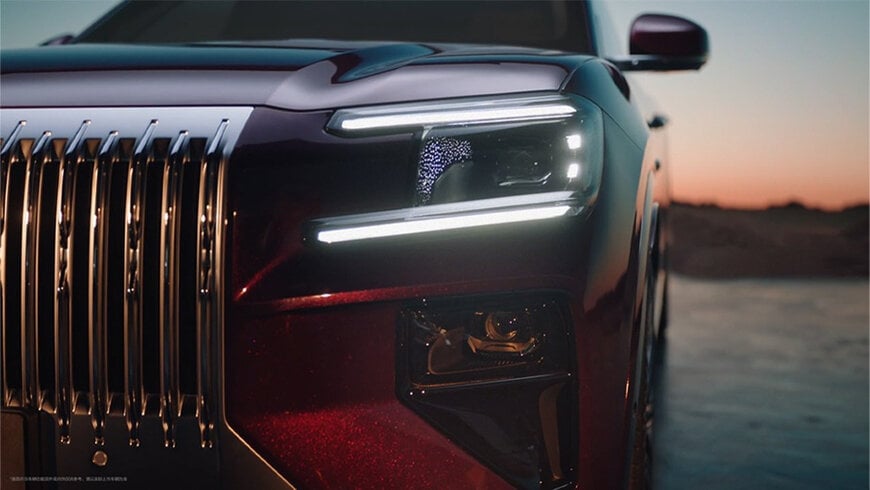
FORVIA HELLA has launched fully localized production of its high-resolution SSL | HD headlamp system in China for the first time, supporting the new Zeekr 8X electric vehicle. The project includes local development, manufacturing and supply chain operations, marking a significant expansion of advanced automotive lighting technology within the Chinese automotive market.
The SSL | HD system is being integrated into the Zeekr 8X, an electric vehicle developed by Zeekr, the premium electric brand of Geely Group. According to FORVIA HELLA, all major stages of development and production for the lighting system are being executed in China, enabling shorter supply chains, faster industrialization cycles and closer alignment with local market requirements.
High-resolution micro-LED headlamp architecture
The SSL | HD system uses a high-resolution micro-LED chip smaller than a fingernail that generates approximately 25,000 individually addressable pixels per headlamp. These pixels can be controlled independently and dynamically, allowing the system to adjust light distribution in real time according to traffic and road conditions.
The technology represents a further development of matrix LED lighting systems already used in premium vehicles. By significantly miniaturizing the light source, FORVIA HELLA has reduced the installation space required for the lighting module by up to 75 percent compared with conventional headlamp systems. This reduction enables greater flexibility in vehicle front-end design while also lowering component weight.
The company stated that software-defined lighting functions can be deployed through over-the-air (OTA) updates without requiring hardware modifications. This approach aligns with broader software-defined vehicle architectures increasingly adopted by electric vehicle manufacturers.
Adaptive projection and vehicle communication functions
The high pixel density enables advanced adaptive lighting functions that extend beyond traditional glare-free high beam systems. In the Zeekr 8X, the SSL | HD system can project dynamic lane guidance markings onto the roadway during highway driving and in narrow construction zones to support driver awareness and vehicle positioning.
FORVIA HELLA has also introduced light-based communication functions between the vehicle and its surroundings. One example includes warning projections that can alert road users when a parked vehicle has been grazed or impacted by another vehicle.
These projection-based systems form part of a growing category of intelligent automotive lighting technologies designed to improve communication between vehicles, pedestrians and surrounding traffic infrastructure. High-resolution projection capabilities can also support future safety applications, including hazard alerts, pedestrian warning zones and navigation guidance.
Localization strategy supports Chinese automotive production
According to Juan Manuel Mollá, Managing Director Lighting at FORVIA HELLA, localization of development and manufacturing activities in China was essential for meeting customer requirements, improving development efficiency and maintaining cost competitiveness.
The project reflects a broader strategy among global automotive suppliers to localize advanced technology production within China’s rapidly expanding electric vehicle sector. The company indicated that local engineering resources, parallel development processes and regionally based supply chains contributed to accelerated industrialization of the SSL | HD platform.
Didier Keskas, Head of Lighting Business Asia at FORVIA HELLA, described the Zeekr 8X program as a reference project demonstrating the combination of advanced lighting technology, localized production and shortened development timelines.
The company stated that future development efforts will continue to focus on supporting Chinese vehicle manufacturers as they expand into international markets and adopt increasingly software-defined vehicle technologies.
Additional Context: Technical specifications and competitive benchmarking not included in the original product announcement
High-resolution automotive lighting has become a key development area among premium vehicle manufacturers as lighting systems evolve from illumination devices into intelligent sensing and communication platforms.
FORVIA HELLA’s SSL | HD technology uses micro-LED clusters capable of generating up to 25,000 pixels per module, while earlier implementations of the technology in premium European vehicles reached more than 32,000 individually controllable pixels per headlamp.
Comparable technologies include Mercedes-Benz Digital Light, which uses over one million micro-mirrors per headlamp for projection functions, and Audi Digital Matrix LED systems, which employ digital micromirror device (DMD) technology to project guidance information and adaptive lighting patterns onto the road surface.
Unlike conventional matrix LED systems that typically control dozens or hundreds of LED segments, high-resolution systems operate with tens of thousands of individually addressable light points, enabling more precise beam shaping, symbol projection and dynamic safety functions. FORVIA HELLA states that SSL | HD systems can support lane projection, safety distance visualization, pedestrian protection zones and customizable lighting features through software updates.
The technology also supports the automotive industry's transition toward software-defined vehicles, where lighting functions can be continuously updated through OTA platforms without requiring physical hardware changes. This capability creates opportunities for feature upgrades, regional lighting adaptations and future vehicle-to-environment communication functions throughout a vehicle’s lifecycle.
Edited by Sucithra Mani, Induportals editor – adapted by AI.
www.hella.com
