
www.auto-innovations.net
15
'26
Written on Modified on
Deterministic Zonal Networking for Software Defined Vehicles
NXP Semiconductors and Quanta cooperate on deterministic networking architecture for scalable software defined vehicle platforms.
www.nxp.com
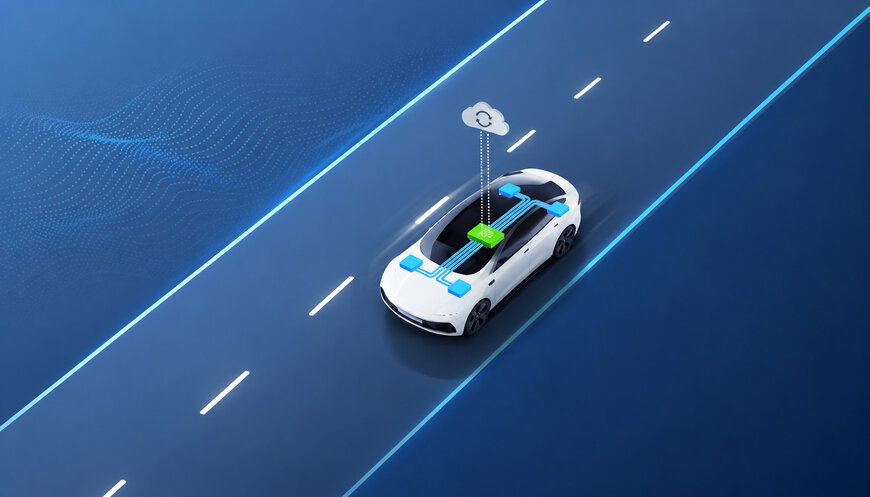
NXP Semiconductors and Quanta are collaborating to develop a deterministic zonal networking platform for software defined vehicles (SDVs). The cooperation focuses on enabling predictable real-time communication across distributed automotive electronic and electrical architectures using zonal controllers, automotive networking, and deterministic middleware.
The solution targets automotive OEMs transitioning from domain-based ECU architectures toward centralized and zonal vehicle platforms. Key application areas include industrial automation within vehicle systems, digital infrastructure for automotive networking, audio over Ethernet, real-time control systems, and smart energy management.
Cooperation Structure and Industrial Challenge
NXP Semiconductors provides the processing, networking, and power management technologies used in the platform. Quanta contributes system integration capabilities and its Adaptive Zonal System platform for deployment and validation in vehicle architectures.
The cooperation addresses a technical challenge associated with SDV development: maintaining deterministic timing and predictable latency across distributed compute nodes and in-vehicle networks. In conventional architectures, integration of multiple ECUs and software domains can introduce latency variation, synchronization issues, and increased integration complexity during late development phases.
The joint approach combines hardware-level networking with deterministic middleware to reduce system-level timing inconsistencies and integration risks during vehicle development.
Technical Architecture and Responsibilities
The platform is based on NXP’s S32 automotive processing platform and integrates TrustMotion MotionWise middleware for deterministic scheduling and communication management.
Key technical components include:
- S32 automotive processors for zonal compute functions
- SJA1110 Time-Sensitive Networking (TSN) Ethernet switches
- CAN and LIN connectivity interfaces
- Multi-PMIC power management architecture
- MotionWise Schedule and MotionWise Communication middleware
The architecture supports automated topology discovery, deterministic schedule generation, and deployment through continuous integration and continuous deployment workflows.
NXP is responsible for the automotive-grade compute, networking, and system orchestration technologies. Quanta supports platform integration, validation, and deployment through its zonal system infrastructure.
The use of TSN-based Ethernet networking enables synchronized communication with predictable end-to-end latency and low jitter across ECUs and vehicle subsystems. This is particularly relevant for latency-sensitive workloads such as audio transport, high-performance computing integration, and real-time remote control processing.
Deployment and Integration
The deterministic zonal networking solution is available for OEM evaluation and ecosystem development. Demonstrations are being conducted on Quanta development platforms, with additional technical showcases planned during 2026.
The platform is designed to integrate with existing automotive E/E infrastructures while supporting migration toward unified zonal architectures across multiple vehicle classes.
The cooperation also includes ongoing alignment with the NXP CoreRide zonal reference system to support broader SDV integration and scalable deployment models.
Operational Impact and Use Cases
The platform aims to reduce integration barriers by combining compute, networking, middleware, and orchestration into a validated hardware/software stack. Automated configuration and deployment workflows can reduce engineering complexity during SDV development and support maintainability across vehicle programs.
The deterministic communication model supports system-level Quality of Service requirements through synchronized scheduling and runtime optimization. This approach can improve process stability and simplify deployment of distributed vehicle software functions across centralized automotive architectures.
Edited by an industrial journalist Sucithra Mani with AI assistance.
www.nxp.com
NXP is responsible for the automotive-grade compute, networking, and system orchestration technologies. Quanta supports platform integration, validation, and deployment through its zonal system infrastructure.
The use of TSN-based Ethernet networking enables synchronized communication with predictable end-to-end latency and low jitter across ECUs and vehicle subsystems. This is particularly relevant for latency-sensitive workloads such as audio transport, high-performance computing integration, and real-time remote control processing.
Deployment and Integration
The deterministic zonal networking solution is available for OEM evaluation and ecosystem development. Demonstrations are being conducted on Quanta development platforms, with additional technical showcases planned during 2026.
The platform is designed to integrate with existing automotive E/E infrastructures while supporting migration toward unified zonal architectures across multiple vehicle classes.
The cooperation also includes ongoing alignment with the NXP CoreRide zonal reference system to support broader SDV integration and scalable deployment models.
Operational Impact and Use Cases
The platform aims to reduce integration barriers by combining compute, networking, middleware, and orchestration into a validated hardware/software stack. Automated configuration and deployment workflows can reduce engineering complexity during SDV development and support maintainability across vehicle programs.
The deterministic communication model supports system-level Quality of Service requirements through synchronized scheduling and runtime optimization. This approach can improve process stability and simplify deployment of distributed vehicle software functions across centralized automotive architectures.
Edited by an industrial journalist Sucithra Mani with AI assistance.
www.nxp.com
