
www.auto-innovations.net
14
'26
Written on Modified on
Versinetic Expands ISO 15118 EV Charging Integration
Regulatory shifts are pushing EV charger OEMs toward ISO 15118-based communication architectures that support secure authentication and grid-interactive charging.
www.versinetic.com
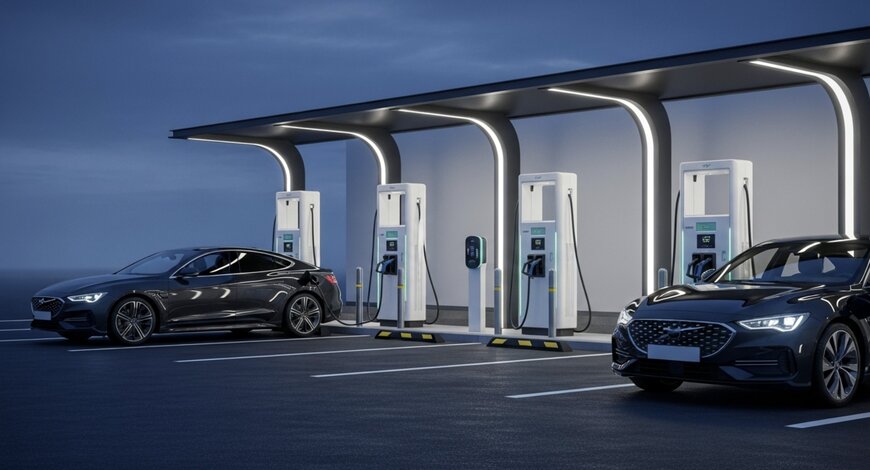
EV charging infrastructure is moving beyond basic power delivery toward vehicle-aware communication, automated authentication, and grid-interactive energy management. This shift is particularly relevant for charge point manufacturers developing systems for public charging networks, workplace installations, and residential energy applications. In this context, Versinetic has expanded its Charging Blox platform to support broader ISO 15118 implementation.
Charging architecture moves beyond IEC 61851 signalling
Conventional EV charging systems have largely relied on IEC 61851, which defines the electrical signalling framework between the charger and vehicle. While this standard remains foundational for charging control, newer interoperability requirements increasingly require higher-level communication between vehicle and infrastructure.
ISO 15118 adds an IP-based communication layer that enables secure data exchange between the EV and charging station. This architecture supports features such as Plug and Charge, where vehicles authenticate automatically without requiring RFID credentials or mobile app authorization, and vehicle-to-grid (V2G) communication for bidirectional energy transfer.
The transition reflects broader changes in the EV charging ecosystem, where communication security, interoperability, and energy management are becoming core design requirements alongside charging performance.
Compliance timelines are shaping charger development
The timing of the platform expansion aligns with regulatory and standards-driven implementation milestones across Europe.
Compliance requirements for EN ISO 15118-2 and ISO 15118-20 are approaching in 2026 and 2027, while the EU's Alternative Fuels Infrastructure Regulation (AFIR) is increasing the importance of interoperable EV charging infrastructure. For OEMs and charge point manufacturers, this creates pressure to integrate compliant communication frameworks while minimizing engineering overhead.
Versinetic’s modular Charging Blox platform addresses this integration layer by combining controller hardware, communication stacks, and associated development tools intended to shorten implementation cycles.
Technical capabilities aimed at interoperability and V2G readiness
The platform supports several functions associated with ISO 15118 deployment.
Plug and Charge implementation enables automatic vehicle authentication and contract-based authorization without requiring separate user interaction.
Transport Layer Security (TLS) support secures exchanges involving vehicle identity and contractual charging credentials, addressing cybersecurity requirements tied to connected charging infrastructure.
Support for ISO 15118-20 also enables readiness for bidirectional charging scenarios, allowing EVs to function as distributed energy assets in vehicle-to-grid architectures.
The platform also extends ISO 15118 functionality into AC charging environments, not only DC fast charging infrastructure, making the standard relevant for workplace charging systems and residential installations where smart energy coordination is becoming more important.
Modular integration approach for charger OEMs
For charger manufacturers, ISO 15118 implementation can introduce complexity across protocol integration, controller design, security certification, and interoperability validation.
Versinetic positions its modular hardware and software approach as a way to reduce development effort by providing pre-integrated building blocks rather than requiring full-stack in-house development.
The company states that its engineering team has more than ten years of experience in EV and green technology systems, with development focused on modular EV charging integration and evolving interoperability standards.
As EV infrastructure increasingly becomes part of a broader smart energy ecosystem, protocol integration is shifting from an optional advanced feature to a baseline engineering requirement for new charger platforms.
Edited by Aishwarya Mambet, Induportals Editor, with AI assistance.
www.versinetic.com
