
www.auto-innovations.net
12
'26
Written on Modified on
Power Electronics Sensing Advances at PCIM 2026
Melexis will present sensing and protection technologies for ePowertrain and high-power electronics applications during PCIM 2026 in Nuremberg, Germany.
www.melexis.com
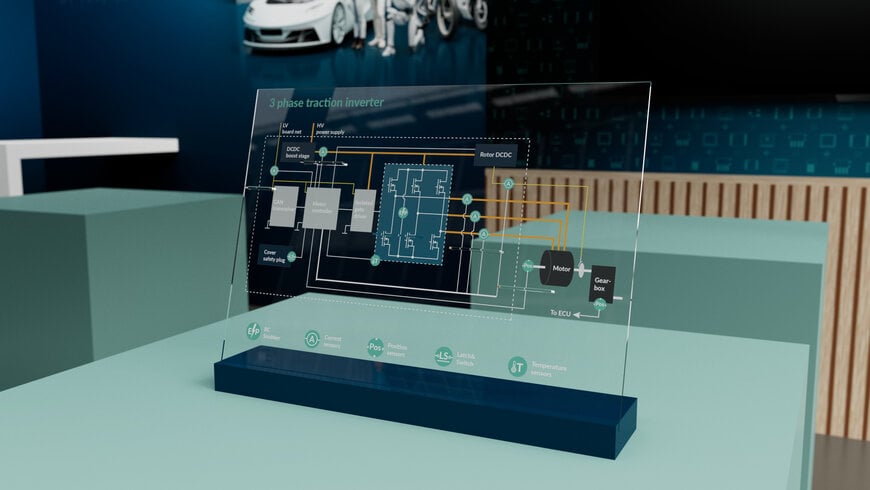
Melexis will showcase its latest semiconductor technologies for electrified mobility and industrial power electronics at PCIM 2026, taking place from 9–11 June in Nuremberg, Germany. At Hall 7, Booth 0230, the company will demonstrate sensing and protection solutions designed to improve efficiency, thermal monitoring, current measurement, and system robustness in ePowertrain and power electronics applications.
The demonstrations will focus on how sensor integration and protection architectures support next-generation electrified systems, including three-phase traction inverters, high-voltage battery systems, and on-board chargers (OBCs). Melexis stated that the showcased technologies are intended to help engineers address system-level requirements linked to efficiency, scalability, electromagnetic compatibility, and functional reliability.
Current Sensor Architectures for High-Power Systems
At PCIM 2026, Melexis will demonstrate multiple current sensing architectures used in automotive and industrial power conversion systems. The company’s portfolio includes shunt-based sensing, C-core and U-shield magnetic approaches, as well as coreless PCB and busbar implementations.
The live demonstrations will feature a mixed-technology three-phase PCB integration and the DVK91235 coreless sensor platform for PCB and busbar current sensing. Melexis will also present electric motor control configurations using integrated coreless sensors, external primary coreless sensors, and IMC-Hall® technology.
According to the company, these architectures support high-current applications including automotive traction inverters, battery systems, and maximum power point tracking (MPPT) solar installations. The demonstrations will additionally examine how different sensing topologies influence integration density, magnetic immunity, and design flexibility within the automotive data ecosystem.
Integrated Si-RC Snubber for Silicon Carbide Modules
Melexis will also present its integrated Si-RC snubber technology developed for silicon carbide (SiC) power modules operating at elevated switching frequencies and voltages.
The company stated that high-frequency switching in SiC-based systems can generate voltage overshoot, ringing effects, and electromagnetic interference that reduce efficiency and affect layout stability. The Si-RC snubber is designed to suppress voltage spikes and high-frequency oscillations directly at module level, positioned close to the switching devices.
The demonstration will include an inverter high-power-density module equipped with the integrated snubber device, allowing visitors to evaluate how the protection approach supports compact and mechanically robust power-module designs.
Contactless FIR Thermal Monitoring
Melexis will further demonstrate its far-infrared (FIR) temperature sensing technologies, including a dedicated busbar monitoring application.
The FIR sensing arrays measure thermal behavior without physical contact with the monitored surface. According to the company, the approach can simplify thermal management in applications such as busbars, traction inverters, electric motors, and battery systems where conventional contact-based sensors may limit mechanical design flexibility or increase response time.
The demonstration will illustrate how contactless sensing contributes to thermal protection strategies in high-power electronic environments while supporting compact system integration.
Position Sensing for Electrified Motion Control
The PCIM demonstrations will also include rotor position sensing technologies intended for electric motor and traction inverter applications.
Melexis plans to showcase inductive resolver technology alongside its Triaxis® magnetic sensing platform. The company stated that the technologies are designed to provide accurate position feedback in electrified motion systems, supporting torque control, motor efficiency, and dynamic responsiveness under demanding operating conditions.
The demonstrations will compare magnetic and inductive sensing approaches used in different e-motor architectures and examine how sensor precision influences overall system behavior in electrified platforms.
Focus on System-Level Electrification Challenges
Paul Laval, EV Powertrain System Expert at Melexis, said the event allows engineers to evaluate broader electrification challenges beyond individual semiconductor components.
According to Laval, the company’s demonstrations are intended to provide hands-on insight into current sensing, SiC protection, FIR temperature monitoring, and position feedback technologies operating in real application environments.
Edited by an industrial journalist Sucithra Mani with AI assistance.
www.melexis.com
