
www.auto-innovations.net
05
'26
Written on Modified on
PHINIA to Debut First Homologated Hydrogen Internal Combustion Engine LCV
PHINIA announces participation in ACT Expo 2026, showcasing a certified hydrogen-powered light commercial vehicle developed with Aramco.
www.phinia.com
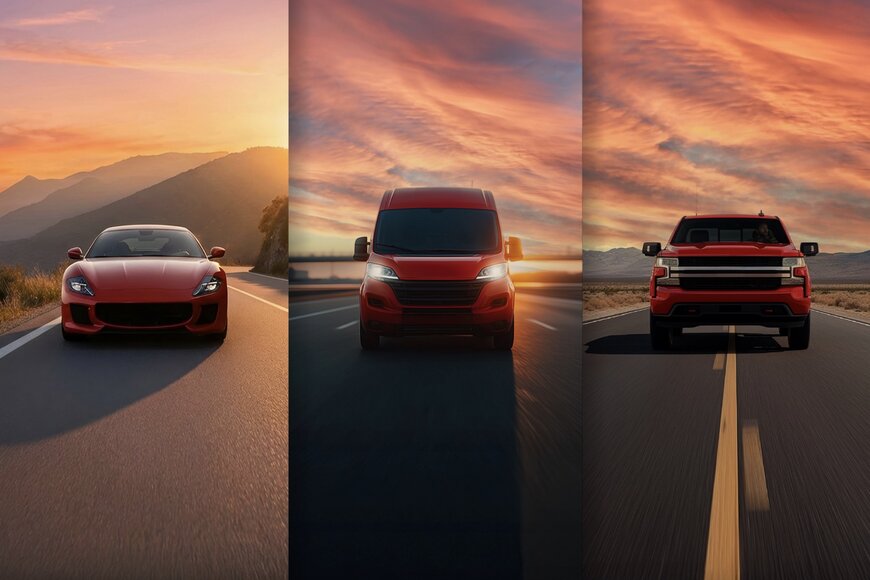
PHINIA has announced its participation in the ACT Expo 2026, held from May 4-7 at the Las Vegas Convention Center, NV. The company will debut its first homologated hydrogen internal combustion engine (H2ICE) light commercial vehicle (LCV), which is certified for on-road use. This milestone reinforces the development of hydrogen combustion as a viable pathway for lower-carbon transportation.
Technical Performance and Emissions
The newly homologated H2ICE van was engineered in collaboration with Aramco to meet Euro 7 emissions standards. The technology is designed to provide:
- CO2 Reduction: Up to 99% reduction in tailpipe CO2 emissions compared to diesel equivalents.
- Operational Range: A real-world driving range of up to 500 km.
- Capacity: Support for light commercial and public transport applications, with the ability to carry up to six passengers.
Adaptable Combustion Technology
Built on PHINIA’s proprietary fuel system expertise, the vehicle integrates advanced hydrogen injection technology into existing engine architectures. Todd Anderson, Chief Technology Officer at PHINIA, noted that the solution leverages proven engine technology to deliver performance, torque, and power comparable to conventional diesel systems. This approach allows for emissions reductions while utilizing the established internal combustion engine ecosystem with minimal modifications.
Portfolio and Event Presence
At booth #3274, PHINIA will also present its broader portfolio of advanced fuel systems and components, including:
Built on PHINIA’s proprietary fuel system expertise, the vehicle integrates advanced hydrogen injection technology into existing engine architectures. Todd Anderson, Chief Technology Officer at PHINIA, noted that the solution leverages proven engine technology to deliver performance, torque, and power comparable to conventional diesel systems. This approach allows for emissions reductions while utilizing the established internal combustion engine ecosystem with minimal modifications.
Portfolio and Event Presence
At booth #3274, PHINIA will also present its broader portfolio of advanced fuel systems and components, including:
- Hydrogen Direct Injection: Supporting near-zero tailpipe CO2 internal combustion.
- High-Pressure Gasoline Direct Injection: Enhancing efficiency in modern vehicles.
- Alternative Fuel Systems: Solutions for compressed natural gas (CNG) and other lower-carbon fuels.
- Evaporative and Fuel Delivery Systems: Improving system integration and environmental impact.
As part of the ACT Expo Ride & Drive experience, attendees can participate as passengers in the hydrogen-powered vehicle to observe its real-world performance.
Additional Context
The homologation of an H2ICE vehicle marks a critical shift in the decarbonization strategy for light commercial vehicles. While hydrogen fuel cells (FCEVs) are often highlighted for zero-emission transport, they require high-purity hydrogen and expensive catalyst materials like platinum. In contrast, hydrogen internal combustion engines are more tolerant of lower-grade hydrogen and can be manufactured using existing high-volume production lines for traditional engines.
Technically, adapting a spark-ignition engine for hydrogen requires sophisticated management of the air-fuel mixture to prevent "backfire" and "pre-ignition," given hydrogen's high flame speed and low ignition energy. PHINIA’s use of direct injection is significant here, as it allows hydrogen to be introduced after the intake valves have closed, eliminating the risk of premature ignition in the intake manifold. By achieving Euro 7 compliance—which sets strict limits on nitrogen oxides (NOx) and particulate matter—PHINIA demonstrates that the lean-burn characteristics of hydrogen can be effectively managed with advanced engine control units and exhaust aftertreatment, providing a practical, scalable alternative to battery-electric or fuel-cell systems for heavy-duty cycle applications.
Edited by Romila DSilva, Induportals Editor, with AI assistance.
Additional Context
The homologation of an H2ICE vehicle marks a critical shift in the decarbonization strategy for light commercial vehicles. While hydrogen fuel cells (FCEVs) are often highlighted for zero-emission transport, they require high-purity hydrogen and expensive catalyst materials like platinum. In contrast, hydrogen internal combustion engines are more tolerant of lower-grade hydrogen and can be manufactured using existing high-volume production lines for traditional engines.
Technically, adapting a spark-ignition engine for hydrogen requires sophisticated management of the air-fuel mixture to prevent "backfire" and "pre-ignition," given hydrogen's high flame speed and low ignition energy. PHINIA’s use of direct injection is significant here, as it allows hydrogen to be introduced after the intake valves have closed, eliminating the risk of premature ignition in the intake manifold. By achieving Euro 7 compliance—which sets strict limits on nitrogen oxides (NOx) and particulate matter—PHINIA demonstrates that the lean-burn characteristics of hydrogen can be effectively managed with advanced engine control units and exhaust aftertreatment, providing a practical, scalable alternative to battery-electric or fuel-cell systems for heavy-duty cycle applications.
Edited by Romila DSilva, Induportals Editor, with AI assistance.
