
www.auto-innovations.net
04
'26
Written on Modified on
Integrated Powertrain Architectures for Electrified Mobility Systems
From June 15-17, in Bühl, Germany, Schaeffler will present scalable powertrain solutions designed to optimize the automotive data ecosystem.
www.schaffner.com
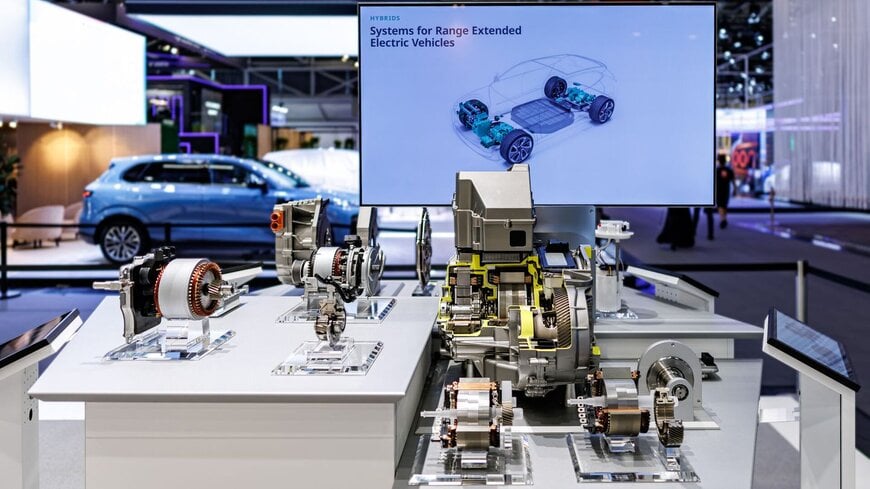
The transition toward electrified mobility requires a shift from discrete mechanical components to highly integrated mechatronic systems that support battery electric, hybrid, and range-extended architectures. To address these requirements, Schaeffler presented its latest developments in powertrain technology at the 13th Schaeffler Automotive Symposium, held in Bühl in June 2024. These solutions focus on increasing power density and reducing system complexity through modular hardware and software integration across the digital supply chain.
Scalable Electric Drive Units and System Integration
In the segment of battery electric vehicles (BEV), development focuses on the transition toward X-in-1 e-axle systems. These units integrate the electric motor, power electronics, transmission, and thermal management into a single housing. By consolidating these functions, the architecture reduces the physical footprint and the number of high-voltage connections, which directly impacts vehicle mass and manufacturing costs.
The technical foundation of these drives relies on scalable inverter platforms. These inverters utilize flexible manufacturing concepts to allow for rapid adaptation to different voltage levels and power outputs. For electric motors, efficiency gains are achieved through advanced winding technologies and targeted material optimization, while current-insulated bearings prevent electrical erosion, ensuring the longevity of high-speed transmission components. This integrated development approach is designed to accelerate time-to-market by streamlining the validation process for complex electronic and software-based sub-systems.
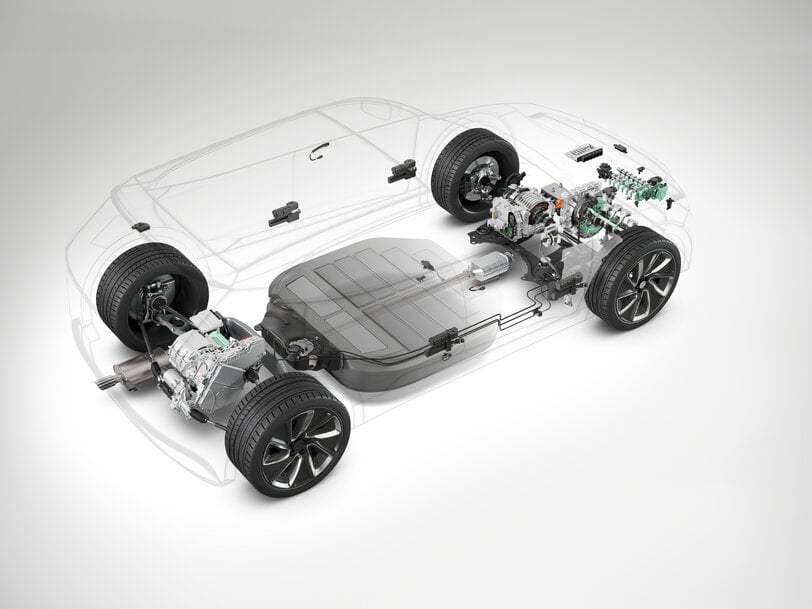
Efficient powertrain solutions from Schaeffler for the sustainable mobility of the future: Hybrid architectures like plug-in and mild hybrids, and range extenders, offer enormous innovation potential. (Photo: Schaeffler)
Hybrid Topologies and Range Extender Applications
While pure electrification continues to expand, hybrid architectures (PHEV and HEV) remain critical for diverse market requirements. Schaeffler provides system solutions for various hybrid topologies, ranging from P1 (engine-mounted) to P3 (transmission-mounted) configurations. These systems are engineered to be compatible with existing vehicle platforms, allowing manufacturers to electrify internal combustion engine (ICE) models with minimal structural modification.
A central element of this portfolio is the dedicated hybrid transmission. This "all-in-one" solution integrates the electric motor and hydraulics with comprehensive control software. For range-extended electric vehicles (REEV), the technology focuses on optimizing the ICE to function solely as a generator. This allows the engine to operate within a narrow, highly efficient mapping range, reducing emissions and noise. The integration of sensors and actuators into these units enables seamless transitions between drive modes, making the mechanical operation of the combustion unit nearly imperceptible to the vehicle occupants.
Strategic Impact on the Automotive Data Ecosystem
The shift toward these highly integrated systems necessitates a robust automotive data ecosystem where software and hardware specifications are harmonized. According to Matthias Zink, CEO Powertrain & Chassis at Schaeffler AG, the company’s Powertrain technology cluster provides the full spectrum of technologies from individual components to functionally integrated systems.
By utilizing a modular "building block" strategy, the company reduces product complexity. Thomas Stierle, CEO E-Mobility at Schaeffler AG, noted that this consistently integrated approach allows for the development of electric powertrains that balance functional density with industrialization requirements. These advancements in mechanical engineering, electronics, and software ensure that the resulting drive systems meet the stringent efficiency and sustainability standards required by modern global automotive regulations and VDA benchmarks.
Edited by Evgeny Churilov, Induportals Media - Adapted by AI.
www.schaeffler.com
