
www.auto-innovations.net
29
'26
Written on Modified on
Bidirectional charging optimizes electric truck energy use
MAN Truck & Bus and Technical University of Munich collaborate with SPIRIT-E partners to demonstrate bidirectional charging for electric trucks in logistics and energy systems.
www.man.eu
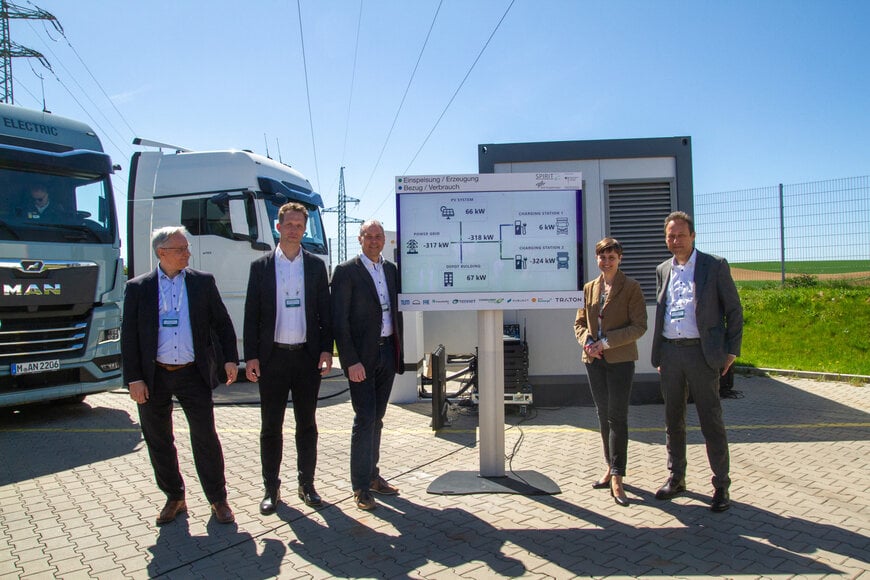
Electric trucks are being evaluated as distributed energy storage units through a cooperative project integrating vehicle technology with energy infrastructure. The SPIRIT-E consortium has demonstrated bidirectional charging under operational conditions, focusing on logistics applications and grid interaction.
Context of the Cooperation
The project brings together MAN Truck & Bus as the vehicle technology provider and Technical University of Munich as consortium lead, alongside energy and system integration partners including Fraunhofer IEE, Research Centre for Energy Economics (FfE), SBRS, TenneT, Hubject, and Consolinno Energy.
The cooperation addresses the integration of battery-electric trucks into energy systems, requiring coordination between vehicle engineering, grid operation, and digital infrastructure. The complexity of bidirectional energy flows and grid interaction necessitates cross-sector collaboration.
Technical Solution and Responsibilities
At the core of the project is a battery-electric truck equipped with bidirectional charging capability, enabling energy exchange between the vehicle and external systems. The system supports three operational modes:
- Vehicle-to-Site (V2S): supplying facility loads or managing peak demand
- Vehicle-to-Vehicle (V2V): transferring energy between electric vehicles
- Vehicle-to-Grid (V2G): feeding electricity into the public grid
The truck platform, developed by MAN Truck & Bus, incorporates a high-capacity battery (480 kWh usable energy) and power electronics enabling controlled charging and discharging. Grid integration and control strategies are supported by TenneT and research partners, while digital interfaces for interoperability are developed with Hubject and Consolinno Energy.
The system relies on coordinated energy management, aligning charging cycles with grid conditions, electricity pricing, and operational logistics. This integration is a key component of emerging digital infrastructure for electrified transport.
Deployment and Implementation
The solution has been tested in a real-world logistics environment at a site operated by Spedition Schmid in southern Germany. Demonstrations included supplying building loads overnight and charging electric passenger vehicles from the truck battery.
Implementation involves integrating the charging system with depot infrastructure and ensuring compatibility with existing electrical installations. Engineering roles are distributed across partners, with vehicle integration, grid interface validation, and system monitoring performed collaboratively.
Applications and Use Cases
The primary application is regional freight transport with annual mileage below 100,000 km, where vehicles have predictable dwell times at depots. Use cases include:
The system relies on coordinated energy management, aligning charging cycles with grid conditions, electricity pricing, and operational logistics. This integration is a key component of emerging digital infrastructure for electrified transport.
Deployment and Implementation
The solution has been tested in a real-world logistics environment at a site operated by Spedition Schmid in southern Germany. Demonstrations included supplying building loads overnight and charging electric passenger vehicles from the truck battery.
Implementation involves integrating the charging system with depot infrastructure and ensuring compatibility with existing electrical installations. Engineering roles are distributed across partners, with vehicle integration, grid interface validation, and system monitoring performed collaboratively.
Applications and Use Cases
The primary application is regional freight transport with annual mileage below 100,000 km, where vehicles have predictable dwell times at depots. Use cases include:
- Peak load management in logistics facilities
- Increasing self-consumption of on-site renewable generation
- Backup power supply for infrastructure
- Grid support through demand response mechanisms
These applications align with broader trends in industrial automation and energy system coupling.
Results and Expected Impact
Operational tests indicate that intelligent energy management can reduce electricity costs by approximately 10–20% through load shifting and optimized energy use. This is achieved by leveraging stored energy during high-price periods and charging during lower-cost intervals.
Beyond cost reduction, the system contributes to grid stability by enabling flexible load balancing. The integration of electric trucks as mobile energy assets introduces a new operational model in which transport and energy systems are interconnected through controlled, bidirectional power flows.
Edited by an industrial journalist Sucithra Mani with AI assistance.
www.mantruckandbus.com
Results and Expected Impact
Operational tests indicate that intelligent energy management can reduce electricity costs by approximately 10–20% through load shifting and optimized energy use. This is achieved by leveraging stored energy during high-price periods and charging during lower-cost intervals.
Beyond cost reduction, the system contributes to grid stability by enabling flexible load balancing. The integration of electric trucks as mobile energy assets introduces a new operational model in which transport and energy systems are interconnected through controlled, bidirectional power flows.
Edited by an industrial journalist Sucithra Mani with AI assistance.
www.mantruckandbus.com
