
www.auto-innovations.net
22
'26
Written on Modified on
Modular PTC Heating Systems for Electric Vehicle Thermal Management
Webasto introduces modular 12-volt air heaters utilizing self-regulating ceramic technology to provide scalable interior climate control for battery-electric transport and specialized machinery.
www.webasto.com
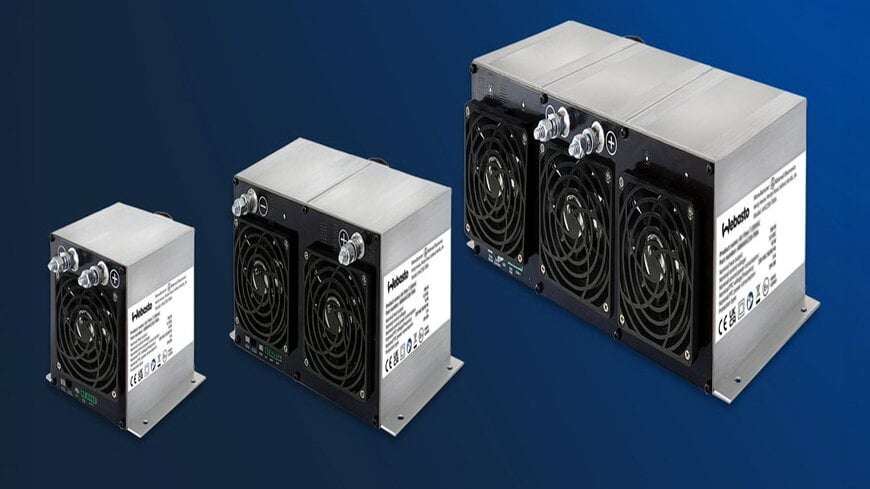
The transition from internal combustion engines to electric propulsion necessitates new methods for cabin climate control, as electric motors do not produce sufficient waste heat for traditional liquid-cooled heating loops. These 12-volt air heaters utilize Positive Temperature Coefficient (PTC) technology to convert energy from the vehicle electrical system into thermal energy, supporting interior heating in light electric vehicles, cabins, and multi-zone transport environments.
Technical Mechanisms of PTC Resistance
The core of this thermal solution relies on PTC heating elements. These ceramic components exhibit a non-linear electrical resistance profile: as the temperature of the material increases, its electrical resistance rises proportionally. This physical property enables a self-regulating feedback loop where the current flow decreases as the element reaches its operating threshold, inherently preventing thermal runaway without requiring complex external safety circuitry. This mechanism ensures high operational reliability and constant heat output regardless of fluctuations in ambient airflow.
Scalability and Geometric Specifications
To address the diverse heating requirements of the automotive data ecosystem and varied vehicle architectures, the system is designed with a modular footprint. A single heating module occupies a volume of 200 x 155 x 150 millimeters and generates up to 700 watts of heating power.
For applications requiring higher thermal loads, these units are available in pre-assembled configurations:
- Two-module systems providing 1,400 watts.
- Three-module systems providing 2,100 watts.
Because these modules operate independently of a central engine block, they can be distributed decentrally within the digital supply chain of vehicle components. This decentralized installation is a critical factor for manufacturers managing limited installation space or those requiring distinct temperature zones within a single cabin, such as in delivery vans or specialized utility vehicles.
Integration and Control Interface
Integration into the vehicle's pneumatic architecture is achieved via standardized air hoses, allowing for precise heat distribution to specific cabin outlets. The heating output is managed through a three-stage regulation system, which can be operated manually or via automated digital controllers to maintain specific setpoints.
Webasto provides several interface options for these systems, including manual switches and digital control units. These interfaces allow for the programming of heating cycles and timers to optimize energy consumption from the drive battery. Technical development is currently underway to extend these control capabilities to mobile applications via Bluetooth connectivity, facilitating remote climate management.
Edited by Evgeny Churilov, Induportals Media - Adapted by AI.
www.webasto.com
Integration and Control Interface
Integration into the vehicle's pneumatic architecture is achieved via standardized air hoses, allowing for precise heat distribution to specific cabin outlets. The heating output is managed through a three-stage regulation system, which can be operated manually or via automated digital controllers to maintain specific setpoints.
Webasto provides several interface options for these systems, including manual switches and digital control units. These interfaces allow for the programming of heating cycles and timers to optimize energy consumption from the drive battery. Technical development is currently underway to extend these control capabilities to mobile applications via Bluetooth connectivity, facilitating remote climate management.
Edited by Evgeny Churilov, Induportals Media - Adapted by AI.
www.webasto.com
