
www.auto-innovations.net
11
'26
Written on Modified on
ADAS and cockpit computing platform expansion
Bosch and Qualcomm Technologies extend collaboration to scalable ADAS and centralized vehicle computing architectures.
www.qualcomm.com
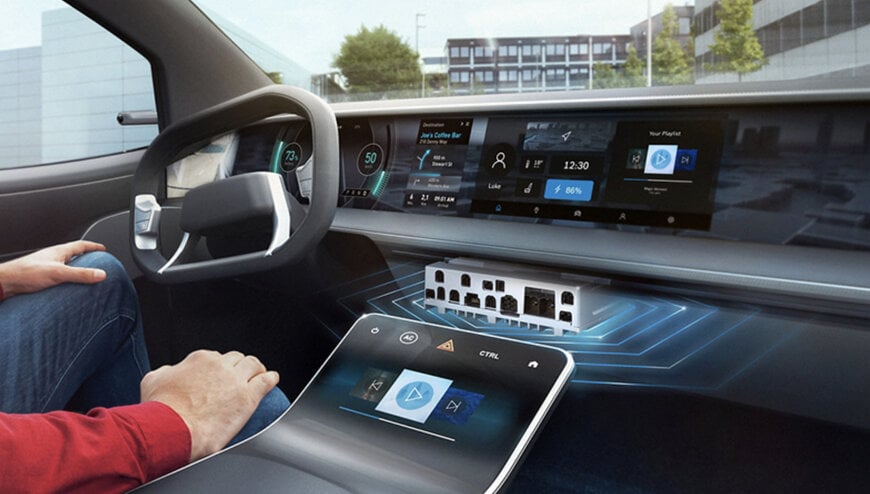
Bosch and Qualcomm Technologies have expanded their strategic partnership from cockpit domain controllers to include advanced driver assistance systems (ADAS), targeting scalable deployment across vehicle segments. The collaboration addresses increasing demand for software-defined vehicle architectures that integrate automated driving, connectivity, and personalized in-vehicle experiences.
Expansion toward integrated ADAS and cockpit platforms
The extended partnership builds on existing cockpit computing solutions and introduces production-ready ADAS platforms based on Qualcomm’s Snapdragon Ride architecture. These systems are designed to support a broad range of functions, from entry-level driver assistance features—such as adaptive speed control and lane keeping—to higher levels of automated driving.
A key technical element is the consolidation of cockpit and ADAS functionalities onto shared computing platforms. Using system-on-chip (SoC) architectures such as Snapdragon Ride Flex, the approach enables mixed-criticality workloads—combining safety-relevant driving functions with infotainment—within a single hardware environment. This reduces system complexity, power consumption, and overall cost.
Scalable vehicle computer architecture
At the core of the collaboration is a modular vehicle computer platform developed by Bosch, designed for ADAS integration. The system supports high-bandwidth data processing, advanced memory management, and multi-sensor fusion, enabling the generation of a real-time 360-degree environmental model.
These capabilities allow the execution of complex perception and decision algorithms required for dynamic vehicle control, including operation at higher speeds. The platform is engineered to meet stringent functional safety requirements up to ASIL-D, aligning with industry standards for safety-critical automotive systems.
Transition toward centralized computing
The joint solution provides a migration path from distributed electronic control units (ECUs) to centralized computing architectures, where a reduced number of high-performance vehicle computers manage multiple vehicle domains. This transition is a defining element of the automotive data ecosystem and supports more efficient software deployment and system updates.
The platforms are designed to be configurable across vehicle segments, enabling deployment from entry-level models to premium vehicles. Initial production programs have secured design wins in East Asian markets, with first vehicle integrations expected by 2028.
Industrialization of digital cockpit systems
The expanded ADAS collaboration builds on an established track record in cockpit computing. Bosch has delivered more than 10 million vehicle computers based on Snapdragon Cockpit Platforms since initial production began in 2021. These systems support a range of human-machine interface (HMI) configurations, from basic display systems to multi-screen, AI-enabled cockpit environments.
The cockpit platform architecture enables integration of features such as real-time graphics rendering, voice interaction, and personalized user interfaces, while maintaining power efficiency across different vehicle classes.
Implications for software-defined vehicles
By combining high-performance semiconductor platforms with system integration capabilities across hardware, software, and safety domains, the collaboration supports the development of software-defined vehicles with scalable functionality. The integration of ADAS and cockpit domains into unified computing platforms reflects a broader industry shift toward centralized architectures and data-driven vehicle operation.
For end users, this translates into wider availability of advanced Level 2 driving features, including lane keeping assistance, hands-free driving in defined conditions, and automated parking, across a broader range of vehicle segments.
Edited by Maria Brueva, Induportals editor – adapted by AI.
www.qualcomm.com
