
www.auto-innovations.net
11
'26
Written on Modified on
Electric vehicle platform strategy for China market
Hyundai Motor Company presents IONIQ concepts and localized mobility ecosystem at Beijing launch event ahead of Auto China 2026.
www.hyundaimotorgroup.com
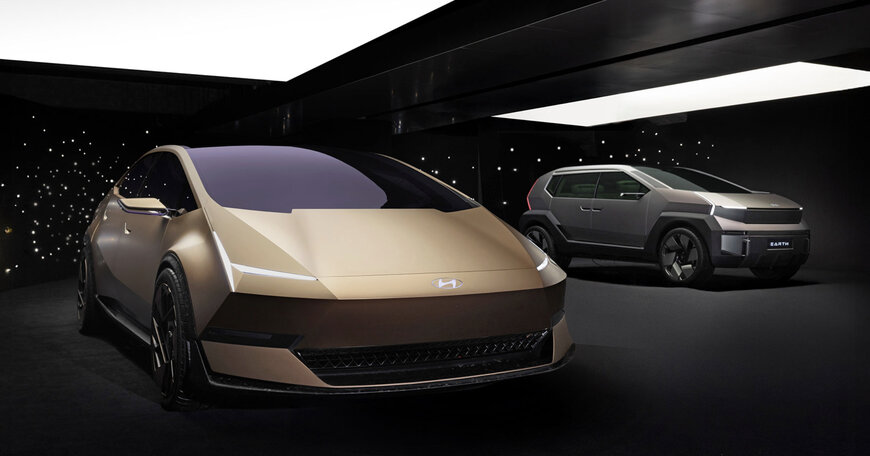
Hyundai Motor Company has introduced its IONIQ all-electric lineup brand in China, presenting two concept vehicles and outlining a localization strategy targeting the country’s rapidly evolving new energy vehicle (NEV) market. The announcement was made in Beijing ahead of Auto China 2026, scheduled for April 24.
Expansion from vehicle lineup to mobility ecosystem
IONIQ, Hyundai Motor’s dedicated electric vehicle platform, is being repositioned in China as part of a broader mobility ecosystem. While the global lineup is based on models such as IONIQ 5, IONIQ 6 and IONIQ 9, the China strategy extends beyond vehicle products to include localized technologies, services, and user experiences.
This approach reflects the increasing integration of digital platforms, connectivity, and user-centric design within the automotive data ecosystem, particularly in markets where electrification and smart mobility adoption are accelerating.
Concept vehicles as design and technology benchmarks
Two battery-electric concept vehicles developed specifically for China—the VENUS sedan and the EARTH SUV—serve as reference platforms for future production models. Both concepts adopt a single-curve design language and are positioned as indicators of Hyundai’s design direction for the local market.
The VENUS concept focuses on aerodynamic efficiency and lightweight construction, incorporating features such as a frame-structured roof and transparent rear spoiler. The interior emphasizes driver-centric ergonomics and layered lighting systems designed to enhance user interaction.
The EARTH concept targets family-oriented applications, combining structural robustness with interior comfort solutions. Features include modular seating concepts and integrated ambient lighting, designed to support longer usage cycles and passenger comfort.
Localization strategy and naming architecture
As part of its China-specific strategy, Hyundai Motor is introducing a new naming convention for IONIQ models based on planetary references. This framework is intended to position each vehicle as part of a customer-centric ecosystem, aligning product identity with user experience design.
The company also highlighted the importance of adapting global EV platforms to local regulatory, technological, and consumer requirements. This includes the integration of region-specific solutions such as extended-range electric vehicle (EREV) architectures.
Integration of autonomous and connected technologies
Hyundai Motor indicated that future IONIQ models for China will incorporate autonomous driving technologies developed in collaboration with local partners. These systems are expected to align with domestic standards for intelligent driving and connected vehicle infrastructure.
The inclusion of localized digital services and smart cabin functionalities reflects the increasing demand for integrated mobility solutions in China’s NEV sector, where software-defined vehicle architectures are becoming a key differentiator.
Positioning within China’s NEV market
By combining electrification platforms with localized development and ecosystem integration, Hyundai Motor aims to strengthen its position in China’s competitive NEV landscape. The concept vehicles and associated strategy illustrate a shift toward adaptable product architectures and data-driven mobility solutions tailored to regional market dynamics.
Edited by Maria Brueva, Induportals editor – adapted by AI.
www.hyundaimotorgroup.com
