
www.auto-innovations.net
16
'26
Written on Modified on
BorgWarner Expands Global Battery Management System Production For Leading OEM
BorgWarner has extended its high-voltage battery management system program with a global manufacturer, supporting the large-scale production of multiple electric vehicle platforms worldwide.
www.borgwarner.com
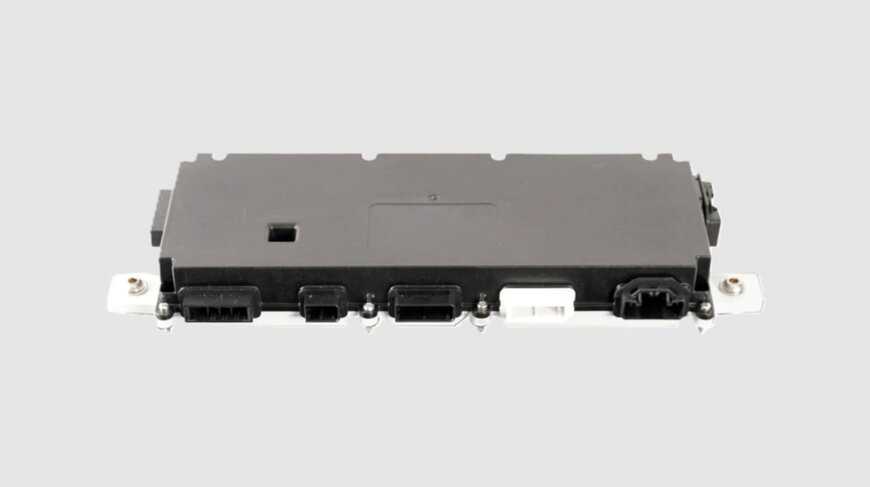
BorgWarner has secured an expanded series-production contract with a global automotive manufacturer, extending its battery management system (BMS) integration across a broader range of vehicle segments. Unlike many rigid, competitor-specific battery controllers, BorgWarner’s technology distinguishes itself through a production-proven, modular architecture that allows manufacturers to scale across different vehicle platforms without the high costs of redesigning electronic interfaces. This expansion will see the technology integrated into B-segment and C-segment passenger cars as well as light commercial vehicles for both battery-electric (BEV) and plug-in hybrid (PHEV) applications starting in 2029.
Versatility Across High-Voltage Platforms
The core competitive advantage of this system lies in its scalable design, which is capable of supporting applications operating at up to 800 volts. While many standard systems are limited to specific voltage ranges, this electronics platform offers the flexibility to manage diverse battery pack configurations. The hardware consists of a central battery monitoring unit (BMU) paired with compact cell monitoring units (CMUs) located directly at the battery modules. This distributed setup enables flexible packaging within the vehicle, allowing OEMs to optimize interior space and weight distribution more effectively than traditional, centralized systems.
Enhancing Battery Longevity and Safety Compliance
Beyond simple energy management, the system provides a comprehensive suite of diagnostics and controls aimed at maximizing the lifecycle of the battery. By performing passive cell balancing and monitoring precise cell voltages, charge levels, and temperatures, the BMS helps mitigate the degradation common in high-performance EVs. Furthermore, the architecture is engineered to meet Automotive Safety Integrity Level D (ASIL D) requirements, the highest classification for functional safety in the industry. This ensures that even during high-speed direct current (DC) charging, the communication and thermal monitoring protocols remain robust against failure.
Proven Reliability and Future-Proof Engineering
A significant factor in the selection of this technology over competing solutions is its established track record in real-world applications. Having been in series production since 2023, the system offers a validated supply footprint and functional reliability that minimizes the risks associated with new technology adoption. The platform is also designed to be forward-compatible, meaning the electronic components can be upgraded to support future software functions without requiring physical hardware overhauls. This provides a clear pathway for manufacturers to maintain vehicle performance and safety standards as battery chemistry and charging infrastructure continue to evolve.
www.borgwarner.com
