
www.auto-innovations.net
09
'26
Written on Modified on
High-Resolution Radar for Automated Driving
FORVIA HELLA advances radar sensor technology for SAE Level 2+ and Level 3 automated driving with new chip integration with semiconductor partner NXP.
www.hella.com
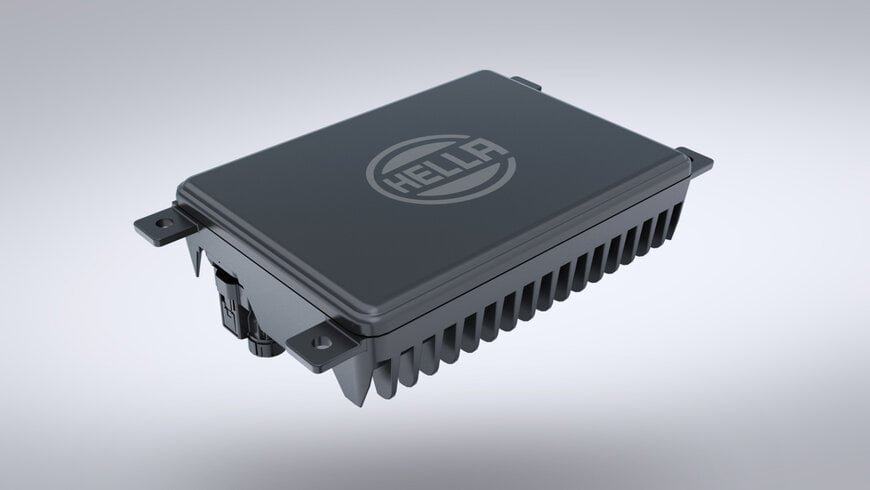
FORVIA HELLA, an automotive supplier, announced the integration of advanced semiconductor technology from NXP into its next-generation high-resolution radar sensors, branded ForWave7HD, aiming to support automated driving functions in passenger vehicles. This development is positioned to serve automated driving control systems up to SAE Level 2+ and conditional automation Level 3, with series production slated from mid-2028 in a project with a global premium manufacturer.
Context and Technical Overview
Automated driving systems rely on a suite of sensors to perceive the vehicle’s surroundings and support driving tasks with varying degrees of autonomy. Within this automotive data ecosystem, radar sensors contribute robust detection of objects and range measurement under diverse environmental conditions, including poor visibility and adverse weather.
FORVIA HELLA’s latest product generation, ForWave7HD radar, integrates up to 32 transmit and receive channels per unit. The multichannel architecture increases spatial resolution and object discrimination compared with lower-channel radar systems. According to the announcement, the sensors achieve a detection range of up to 400 meters while also improving near-range sensing and expanding the field of view.
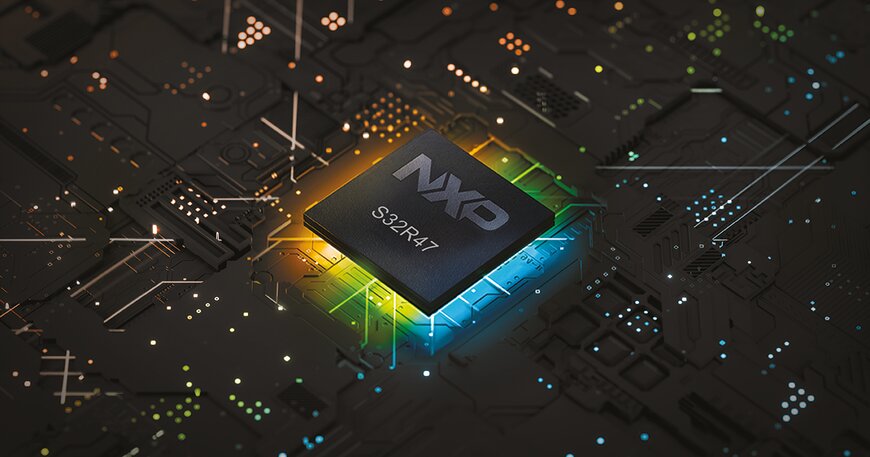
The collaboration with NXP makes use of NXP’s third-generation imaging radar chipset, with the S32R47 processor as a core component. Radar operation requires transmission of high-frequency signals and reception of their echoes from objects; higher processing capability supports finer resolution and faster signal interpretation, which is critical for automated driving functions that depend on rapid, reliable environmental perception. Overall product responsibility, including hardware and software development and industrialization, remains with FORVIA HELLA, drawing on its 25 years of radar sensor engineering experience.
Relevance to Automated Driving Systems
The digital supply chain for automated driving includes a combination of perception sensors (radar, cameras, lidar), compute platforms, and data fusion algorithms. ForWave7HD radars, with their increased channel count and detection capability, are designed to feed higher-fidelity object and range data into these architectures. Specifically:
- SAE Level 2+ systems provide partial automation of steering, acceleration, and braking while requiring continuous driver supervision. Enhanced radar resolution improves lane-level object detection and adaptive cruise/steering support.
- SAE Level 3 (conditional automation) permits the system to perform all dynamic driving tasks under certain conditions without driver monitoring, transferring responsibility to the system within its operational design domain. Greater sensor precision supports the environmental modeling and safety margins required for conditional automation.
Technical Use Cases and Benefits
In practical applications, high-resolution radar sensors such as ForWave7HD extend the capabilities of advanced driver-assist systems (ADAS) by:
In practical applications, high-resolution radar sensors such as ForWave7HD extend the capabilities of advanced driver-assist systems (ADAS) by:
- detecting smaller or distant objects earlier, which can improve longitudinal control in adaptive cruise scenarios and lateral control in complex traffic environments;
- providing redundancy to camera and lidar systems, which can be limited by lighting or weather conditions; and
- supplying consistent range and velocity data essential to collision avoidance and automated merging or lane-keeping functions.
By increasing object detection resolution and range, these radars contribute to a sensor fusion framework that supports both current driver assistance functions and future automated driving features.
Industry Position
High-resolution radar sensors are increasingly part of technical roadmaps for automakers and suppliers targeting higher levels of automation. Comparable approaches leverage multichannel radar and advanced signal-processing chips to enhance object classification and tracking performance. In this context, the integration of sophisticated semiconductor components reflects trends toward tighter coupling between sensor hardware and domain-specific processing, driven by measurable performance criteria such as channel count, detection range, and field of view.
The SAE International standard defines the automation levels referenced:
Industry Position
High-resolution radar sensors are increasingly part of technical roadmaps for automakers and suppliers targeting higher levels of automation. Comparable approaches leverage multichannel radar and advanced signal-processing chips to enhance object classification and tracking performance. In this context, the integration of sophisticated semiconductor components reflects trends toward tighter coupling between sensor hardware and domain-specific processing, driven by measurable performance criteria such as channel count, detection range, and field of view.
The SAE International standard defines the automation levels referenced:
- Level 2+: partial vehicle automation requiring driver monitoring; and
- Level 3: conditional automation where the system handles driving under specific conditions and can request human intervention when exiting those conditions. These levels represent incremental steps toward higher degrees of autonomy and require correlated improvements in sensor and processing technology.
