
www.auto-innovations.net
07
'26
Written on Modified on
Kyocera Showcases AI, IoT and Sensor Technologies for Future Mobility
Kyocera is expanding its mobility portfolio with AI-enabled sensing, optical communication and high-frequency modules designed for autonomous systems, edge intelligence and next-generation transportation platforms.
global.kyocera.com
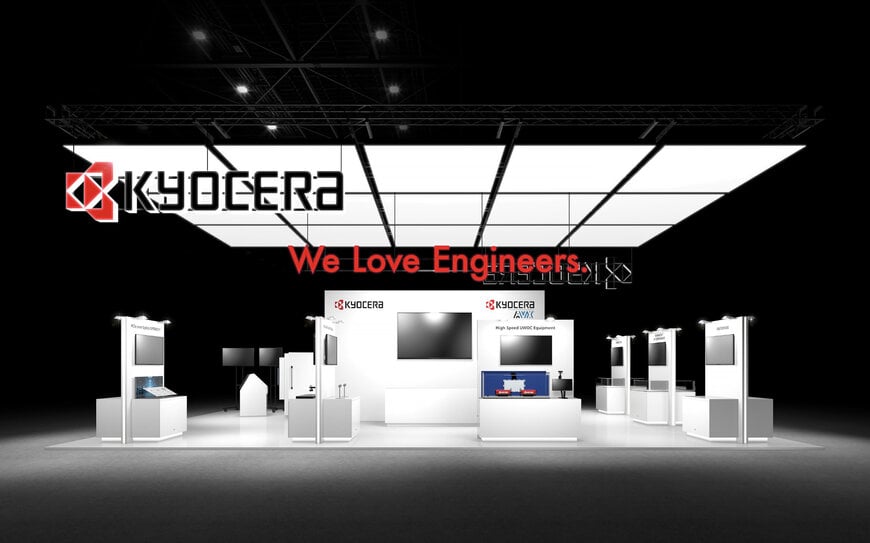
As mobility systems become increasingly software-defined and sensor-driven, hardware suppliers are under pressure to deliver compact, high-performance technologies that support autonomy, connectivity and real-time decision-making. Kyocera is addressing these requirements through a broad set of AI, IoT and sensing solutions aimed at automotive, robotics and advanced mobility applications.
The company is presenting its latest developments at CES 2026, taking place January 6–9, 2026, in Las Vegas, Nevada, where Kyocera is exhibiting in the West Hall, Booth #6501.
AI-driven sensing for autonomous and close-range perception
One focus of Kyocera’s showcase is a triple-lens AI-based high-resolution depth sensor designed for precise short-range imaging. By combining multiple optical paths with onboard AI processing, the sensor improves depth accuracy and object recognition in confined environments. Such capabilities are relevant for autonomous vehicles, mobile robots and advanced driver assistance systems that require reliable perception at close distances, including parking, docking and low-speed maneuvering scenarios.
Kyocera is also demonstrating a high-resolution millimeter-wave sensor, supporting robust detection in challenging conditions where optical systems may be limited. Millimeter-wave sensing plays a key role in modern mobility platforms by enabling consistent performance in fog, rain or low-visibility environments.
Optical communication and compact display technologies
Beyond sensing, Kyocera is highlighting underwater wireless optical communication (UWOC) technology, which enables high-speed, stable data transmission through water. While originally developed for marine and industrial applications, such communication methods are increasingly relevant for subsea infrastructure monitoring, offshore energy systems and autonomous underwater vehicles.
Another technology on display is a wearable aerial display, which projects images into free space using compact optical components. This approach supports lighter and smaller display systems, opening possibilities for head-mounted displays and human-machine interfaces in mobility and industrial environments.
Integrated modules for AI and high-speed data exchange
To support the growing data demands of AI and autonomous systems, Kyocera is presenting an optoelectronic integrated module designed to improve data transfer speed, energy efficiency and space utilization. These modules address bottlenecks in signal integrity and power consumption that emerge as vehicles and machines adopt higher levels of onboard processing and sensor fusion.
In addition, Kyocera International Inc. is demonstrating a phased-array antenna module, illustrating how advanced antenna integration supports high-frequency communication and beamforming for connected and autonomous platforms.
Broader applications across mobility and human-machine interaction
Kyocera’s booth also includes the first U.S. presentation of a real-time interactive caption display system from Kyocera Document Solutions Inc., highlighting accessibility and human-machine communication technologies that extend beyond automotive into public infrastructure and smart environments.
By combining AI-enabled sensors, optical communication, advanced antenna systems and integrated modules, Kyocera is positioning its technologies as building blocks for future mobility platforms that demand reliable perception, efficient data exchange and compact system integration.
www.global.kyocera.com
