
www.auto-innovations.net
10
'26
Written on Modified on
Recycled Vehicle Plastics for Automotive Interior Components
MATERI’ACT and Renault implement recycled end-of-life vehicle plastics in series production to support circular automotive manufacturing.
www.forvia.com
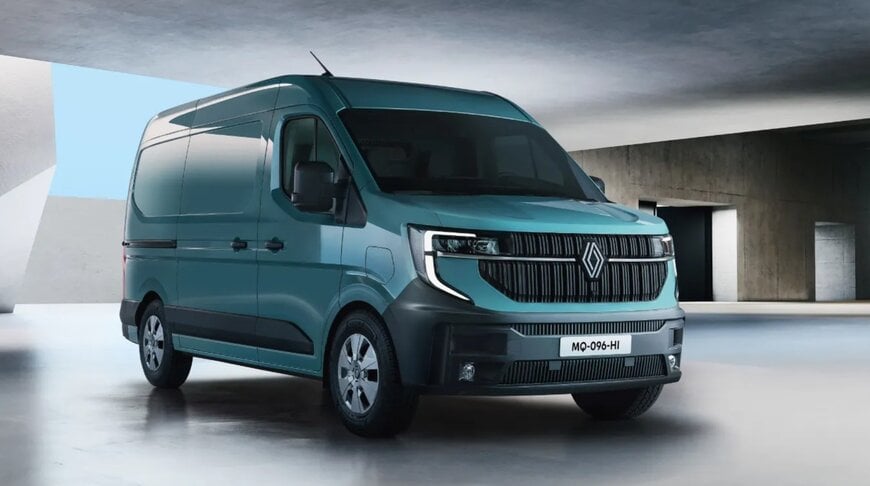
MATERI’ACT, a company launched by FORVIA, and Renault have collaborated to introduce a polypropylene-based material containing recycled plastics from end-of-life vehicles into serial production for visible automotive interior components. The solution targets the automotive manufacturing sector, demonstrating how circular material streams can be integrated into high-volume vehicle production while meeting technical, safety, and cost requirements.
Industrial Cooperation for Automotive Circularity
The cooperation brings together complementary expertise across the automotive recycling and manufacturing value chain. MATERI’ACT developed the IniCycled-P polypropylene compound, while Renault validated and deployed the material for series production in the instrument panel of the Renault Master light commercial vehicle.
The recycled polymer feedstock is supplied through GAIA, a subsidiary of The Future is NEUTRAL. End-of-life vehicles are collected and dismantled by INDRA before plastics are sorted, processed, and recycled by GAIA. The recovered material is then converted by MATERI’ACT into an engineering-grade compound suitable for automotive applications and integrated by Renault into vehicle production. This closed-loop approach addresses the challenge of returning post-consumer automotive plastics to components with demanding technical specifications.
Technical Development and Partner Responsibilities
IniCycled-P is a polypropylene-based compound containing 20% recycled plastic from end-of-life vehicles, 15% talc filler, and impact modifiers to achieve the required mechanical and surface properties. The material was engineered specifically for visible interior applications where appearance, durability, occupant safety, and interior air-quality requirements must all be satisfied.
MATERI’ACT was responsible for material formulation, testing, and industrial validation. Renault qualified the compound for serial production and integrated it into its manufacturing processes. GAIA and INDRA provide the recycling infrastructure that enables traceable recovery and preparation of recycled plastics for reintegration into automotive production.
Testing confirmed that the material satisfies the mechanical and safety requirements for instrument panels, including airbag deployment performance comparable with, and in certain configurations exceeding, conventional virgin polypropylene.
Industrial Deployment
The material has entered serial production for the Renault Master, the largest light commercial vehicle in Renault's portfolio. IniCycled-P is fully compatible with conventional injection moulding processes and can be processed without modifications to existing manufacturing equipment or production parameters. This compatibility simplifies implementation within established automotive production lines and reduces barriers to industrial adoption.
Applications and Industrial Benefits
The primary application is visible interior components, particularly instrument panels that require high dimensional stability, impact resistance, surface quality, and long-term durability. The solution supports automotive manufacturers seeking to increase recycled material content while maintaining production efficiency and component performance.
Compared with conventional polypropylene, IniCycled-P reduces carbon emissions by 24%, achieving a carbon footprint of 1.47 kg CO₂e per kilogram of material. The material also supports compliance with forthcoming European requirements related to recycled content and eco-design, demonstrating how recycled automotive plastics can be incorporated into large-scale vehicle manufacturing through an integrated circular supply chain.
Edited by Evgeny Churilov, Induportals Media - Adapted by AI.
www.forvia.com
