
www.auto-innovations.net
03
'25
Written on Modified on
Purem by Eberspaecher Develops High-Strength Steel Housings for Electric Vehicle Batteries
New steel battery housings improve safety, cut weight, lower costs, and reduce carbon footprint compared to aluminum, meeting future e-mobility standards.
www.eberspaecher.com
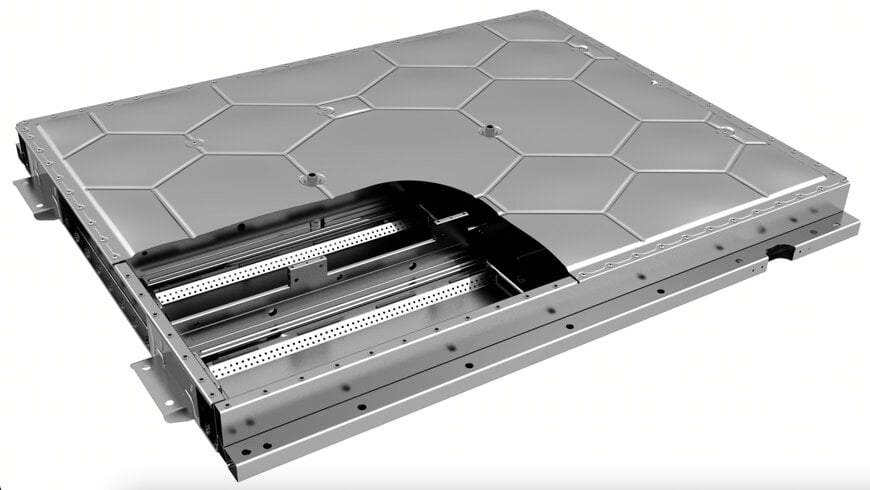
The battery housing for electric passenger cars from Purem by Eberspächer, made of high-strength steel.
More sustainable, lighter, cheaper, and above all: safe. These are the requirements that vehicle manufacturers will place on the next battery generation of electric passenger cars. Purem by Eberspaecher has broadened its portfolio by developing the corresponding housings made of high strength steel and meets the comprehensive requirements for batteries for e‑mobility.
In current model generations of electric and hybrid vehicles, suppliers and manufacturers mostly rely on the use of aluminum for the battery housing. With an innovative steel concept, Purem by Eberspaecher offers a more economical and sustainable option with a high level of safety.
Protection in dangerous situations
In the event of an accident and the associated damage to the battery, passengers must be protected—in electric vehicles, this task is assumed by the specially designed battery housing. Purem by Eberspaecher relies on steel in the development of a new concept. Thanks to this material’s high strength and the corresponding design, the housing protects the battery in the event of a collision or from being hit by foreign objects. In addition, precisely placed weld seams and special sealing solutions ensure the necessary hermetic insulation of the battery modules. This protects passengers from fire or toxic gases in critical situations. With its concept, Purem by Eberspaecher meets current customer requirements and future legislation with regard to battery protection.
Economic and sustainable optimization
Compared to aluminum, steel offers greater strength and makes lighter battery housings possible thanks to the use of thinner walls. Every gram counts, especially for high-performance batteries with a long operating scope—and is therefore an important competitive factor. In addition, production is not only more cost-effective, but also generates a smaller carbon footprint: The material can be produced using less carbon dioxide and is easier to recycle. Together with strategic partners, the exhaust and acoustics specialist contributes its extensive knowledge of material processing and the corresponding welding processes to the development. In addition to battery housings for purely electric vehicles, Purem by Eberspaecher offers concepts for plug-in hybrids.
Customized design
For the development of application-specific battery housings, the supplier relies on its expertise in virtual process planning and simultaneous engineering. The design is customized to accommodate the necessary ventilation ducts, the cable routing of the high voltage connections, or the arrangement of the individual battery modules. Intensive company-wide collaboration between exhaust specialists and electronics experts ensures comprehensive advice on the integration of a battery management system.
www.eberspaecher.com
More sustainable, lighter, cheaper, and above all: safe. These are the requirements that vehicle manufacturers will place on the next battery generation of electric passenger cars. Purem by Eberspaecher has broadened its portfolio by developing the corresponding housings made of high strength steel and meets the comprehensive requirements for batteries for e‑mobility.
In current model generations of electric and hybrid vehicles, suppliers and manufacturers mostly rely on the use of aluminum for the battery housing. With an innovative steel concept, Purem by Eberspaecher offers a more economical and sustainable option with a high level of safety.
Protection in dangerous situations
In the event of an accident and the associated damage to the battery, passengers must be protected—in electric vehicles, this task is assumed by the specially designed battery housing. Purem by Eberspaecher relies on steel in the development of a new concept. Thanks to this material’s high strength and the corresponding design, the housing protects the battery in the event of a collision or from being hit by foreign objects. In addition, precisely placed weld seams and special sealing solutions ensure the necessary hermetic insulation of the battery modules. This protects passengers from fire or toxic gases in critical situations. With its concept, Purem by Eberspaecher meets current customer requirements and future legislation with regard to battery protection.
Economic and sustainable optimization
Compared to aluminum, steel offers greater strength and makes lighter battery housings possible thanks to the use of thinner walls. Every gram counts, especially for high-performance batteries with a long operating scope—and is therefore an important competitive factor. In addition, production is not only more cost-effective, but also generates a smaller carbon footprint: The material can be produced using less carbon dioxide and is easier to recycle. Together with strategic partners, the exhaust and acoustics specialist contributes its extensive knowledge of material processing and the corresponding welding processes to the development. In addition to battery housings for purely electric vehicles, Purem by Eberspaecher offers concepts for plug-in hybrids.
Customized design
For the development of application-specific battery housings, the supplier relies on its expertise in virtual process planning and simultaneous engineering. The design is customized to accommodate the necessary ventilation ducts, the cable routing of the high voltage connections, or the arrangement of the individual battery modules. Intensive company-wide collaboration between exhaust specialists and electronics experts ensures comprehensive advice on the integration of a battery management system.
www.eberspaecher.com
