Volkswagen is strengthening its expertise in the integration of automotive software. At present, high-performance automotive functions can only be achieved by networking many individual software and hardware components. Integrating these components and testing the resulting assembly is a key development task for Volkswagen. As part of its ACCELERATE strategy, Volkswagen is seeking to grow automotive software integration and the digital customer experience as core competencies. The company has therefore established a joint venture with TraceTronic, a world-leading provider of solutions to test and integrate automotive software. Each partner holds 50 percent in the joint venture, named neocx, which will create a continuous integration/continuous testing (CI/CT) factory.
KUKA received several orders in the Chinese market in the second quarter. The automation specialist not only scored in traditional areas, but also won orders and projects in the general industry and e-mobility.
The initiative would complete more than 450 km of emission-free route between the Region of Murcia and the Valencian Community and plans to be extended to the rest of the freight corridors in the country. The project includes the acquisition of heavy trucks, the development of innovative, very high power charging infrastructure (1 MW electric chargers) and the deployment of a smart grid.
BorgWarner is making significant traction in the China mobility market, most recently with contracts to supply dual inverters for two premier Chinese OEMs.
Vehicles in California powered by renewable natural gas (RNG) removed more carbon dioxide from the atmosphere than they emitted for the first time in 2020, a direct result of the continued drop in carbon intensity of renewable natural gas.
Continental enables the use of reprocessed polyester obtained from recycled plastic bottles in its tire production as of 2022. The new sustainable polyester yarn will be obtained from polyethylene terephthalate (PET) bottles by a mechanical process and will be used in the construction of the tire carcass.
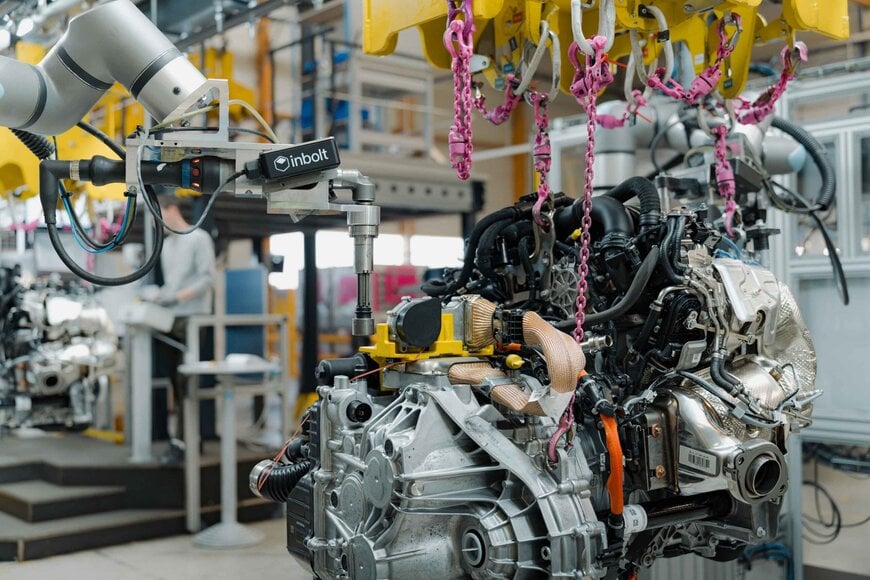
The global automotive supplier HELLA is continuing to drive forward its global automation initiative. That is why the company is investing a figure in the high two-digit millions (Euros) to further automate the 15 production sites in its global lighting division. Most notably, this involves implementing collaborative robots (cobots) and artificial intelligence methods. The project is scheduled to run for a total of five years. There will be 1,000 cobots used in total worldwide, roughly half of which are already in use.