
www.auto-innovations.net
18
'26
Written on Modified on
Flexible-Energy Curing Technology for Automotive Paint Ovens
Dürr introduces Qflex technology to decouple automotive curing ovens from specific energy sources.
www.durr.com
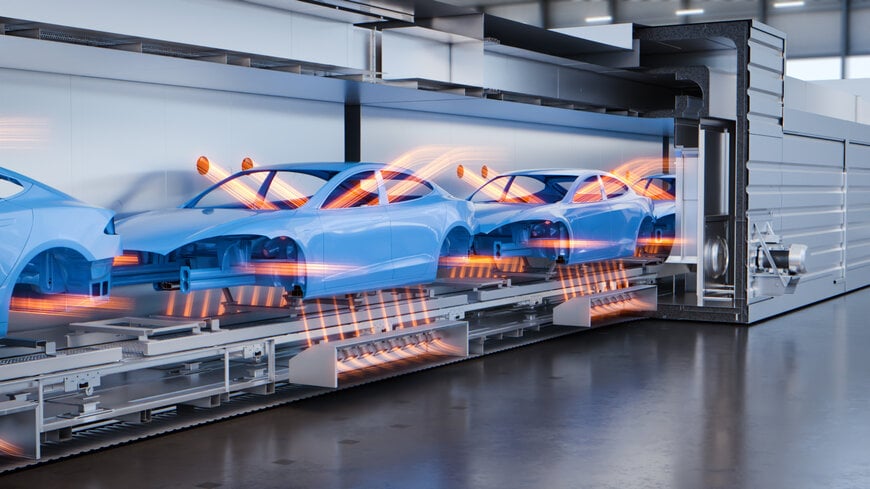
Dürr has introduced Qflex technology, a flexible-energy concept for automotive paint curing ovens. The architecture decouples the primary curing structure from the energy source, allowing manufacturers to switch between natural gas, electricity, and future hydrogen systems without modifying the fundamental oven infrastructure.
Centralized Heating Module and Hybrid Integration
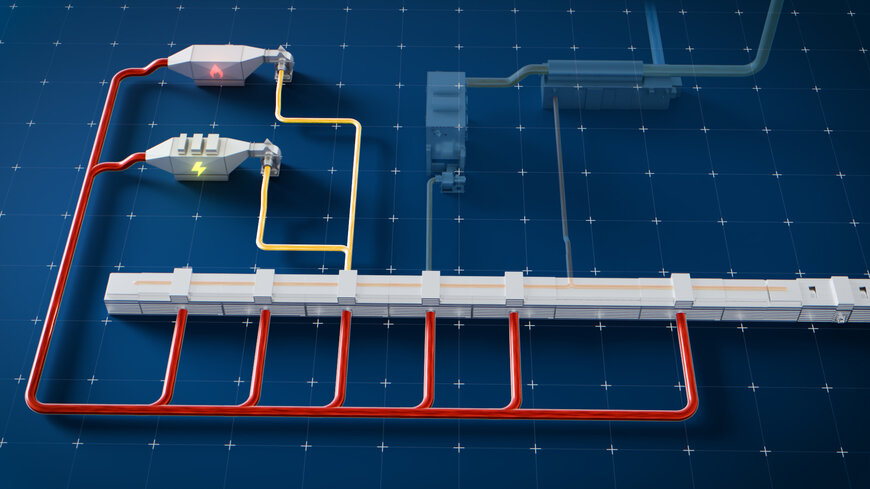
The Qflex system utilizes a centralized heating module that generates thermal energy and distributes it to varying oven zones through a network of distribution ducts. This hybrid heating circuit permits the integration of different energy sources based on real-time availability and grid costs. Facility operators can modify or upgrade the external heating module—such as integrating high-temperature electric storage systems paired with solar installations—while the core oven remains structurally unchanged.
Transverse and Longitudinal Oven Configurations
The flexible-energy technology is integrated into two primary oven configurations: the EcoInCure and the EcoSmartCure. The EcoInCure operates as a transverse oven, while the new EcoSmartCure utilizes a longitudinal travel configuration equipped with a stop-and-go operational mode. This mode subjects vehicle bodies to defined stop phases, enabling targeted temperature regulation rather than relying solely on continuous airflow. Both systems feature a compact, single-level design optimized for brownfield modernization projects, minimizing required facility footprints during retrofits.
Additional Context: This section details technical specifications not included in the original announcement
In automotive paint shops, curing ovens are responsible for cross-linking the polymer chains within the electrocoat (E-coat), primer, and topcoat layers. The transition to electric vehicles (EVs) has introduced significant thermal management challenges during this process. The massive structural components required to house EV battery trays—often thick, reinforced aluminum extrusions or high-strength steel—act as thermal heat sinks. In traditional continuous-flow longitudinal ovens, these heavy underbodies often fail to reach the required curing temperature simultaneously with the thinner sheet metal of the roof or doors. The stop-and-go mode utilized in the EcoSmartCure addresses this by allowing heavy structural nodes to achieve thermal equilibrium (soak time) without over-baking the lighter upper-body panels. Furthermore, transitioning from gas burners to centralized electric heating elements is a critical engineering requirement for automotive OEMs attempting to decarbonize their Scope 1 emissions, as paint shop ovens traditionally represent the single highest natural gas consumption point in a vehicle assembly plant.
Edited by Lekshman Ramdas, Induportals editor – adapted by AI.
www.durr.com
