

www.auto-innovations.net
15
'26
Written on
Modified on
Fersa News
Fersa Unveils Fuel Efficient Generation 3 Wheel-End Technology at IAA Transportation 2026
New generation reduces friction 10% versus Generation 2 and 65% against baseline through coatings, lubrication, materials, cage and hub optimisation.
www.fersa.com
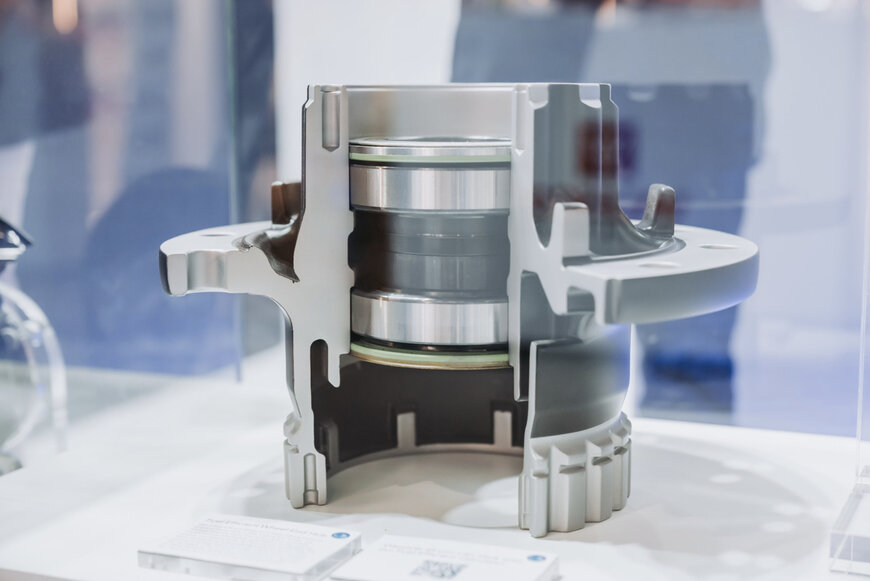
Fersa has introduced its third-generation low-friction wheel-end platform engineered to decrease mechanical drag and energy losses in heavy-duty commercial vehicles. The system combines advanced rolling element surface coatings, high-strength metallurgy, and redesigned cage geometry to assist heavy-duty truck and trailer manufacturers in complying with mandatory fleet emission reduction targets.
System-Level Tribological Upgrades and Geometric Optimization
Energy dissipation at the wheel end directly impacts commercial vehicle operating efficiency. In long-haul logistics fleets, mechanical resistance within wheel-hub bearings generates parasitic drag that increases fuel burn and fleet carbon output. The third-generation assembly addresses these mechanical inefficiencies by moving beyond isolated bearing geometry adjustments to adopt a system-level tribological approach.
The architecture integrates high-strength steel alloys, specialized thin-film coatings applied directly to the rolling elements, and an engineered cage structure that maintains roller alignment under heavy radial and cornering loads. Internal lubricant pathways have been redesigned to ensure fluid circulation across critical contact zones without inducing hydrodynamic churning losses. Relative to baseline commercial wheel-end assemblies, these combined mechanical modifications yield a 65 percent cumulative reduction in friction, representing an incremental 10 percent friction improvement over the preceding second-generation platform while sustaining standard load ratings and service lifecycles.
Standardized Energy Calculation Verification and OEM Integration
The development trajectory of the platform relies on internal computer-aided engineering, dynamic multi-body contact simulations, and physical laboratory endurance validation. Testing protocols include replication of wheel-bearing cycle loads defined by the European Commission's Vehicle Energy Consumption Calculation Tool (VECTO), which establishes standardized fuel consumption and carbon dioxide simulation values for heavy commercial vehicles. Following internal bench validation, components undergo external third-party laboratory certification to provide auditable efficiency data for vehicle homologation.
Sergio Santo Domingo, Chief Engineering Officer at Fersa, stated that the technical platform combines developments across lubrication dynamics, surface finishes, metallurgy, and component architecture to reduce mechanical friction while preserving the dynamic load capacities required in heavy-duty operating environments.
Markus Schneider, Global Head of Automotive OEM at Fersa, explained that heavy-duty commercial vehicle efficiency requires systematic optimization of mechanical sub-assemblies, providing vehicle manufacturers with a technical foundation that can be adapted to specific axle architectures and platform engineering requirements.
Exhibition Presentation at Commercial Transport Fair
The low-friction wheel-end technology was presented at the IAA Transportation exhibition, held September 15–20, 2026, with an initial press preview on September 14, at the Hannover Fairground in Hannover, Germany. The engineering developments and validation data were exhibited in Hall 12, Stand E48, during discussions with commercial vehicle manufacturers regarding integration into upcoming truck and trailer chassis programs.
Additional Context:
This section details technical specifications and competitive benchmarking not included in the original product announcement
Heavy-duty commercial vehicle wheel ends operate under radial axle loads typically spanning 9 to 13 metric tons per axle. Under standard long-haul cruising conditions, conventional tapered roller bearing arrangements generate friction torques ranging from 1.5 to 3.5 Newton-meters per wheel end, primarily driven by roller-end to rib sliding friction, roller raceway rolling resistance, cage guidance friction, and elastomeric radial shaft seal contact drag. The application of optimized raceway crowning, physical vapor deposition carbon coatings on roller ends, and low-friction labyrinth-contact cassette seals reduces parasitic torque levels to less than 1.0 Newton-meter per hub unit.
Within the commercial vehicle wheel bearing sector, comparable low-friction benchmark systems include the SKF Truck Hub Unit (THU) and the Schaeffler FAG Insert Unit (IU).
The SKF Truck Hub Unit integrates pre-greased, sealed-for-life double-row tapered roller assemblies featuring optimized logarithmic raceway profiles and low-friction cassette seals. SKF reports friction reductions of up to 30 to 40 percent compared to conventional loose tapered roller bearing pairs through factory-calibrated internal preload tolerances (controlled within 10 to 15 microns) and synthetic grease formulations. While SKF focuses primarily on unitized, non-serviceable sealed assemblies to eliminate field preload error, Fersa's third-generation approach emphasizes roller surface modifications and internal lubricant flow dynamics to achieve up to a 65 percent friction reduction from unoptimized baseline configurations.
Schaeffler provides the FAG Insert Unit, an engineered bearing pack that integrates pre-adjusted inner rings and high-precision plastic or pressed-steel retainers for heavy truck and trailer axles. The FAG system reduces friction by approximately 20 to 35 percent relative to standard DIN 720 tapered bearings through precision roller end-face micro-finishing (surface roughness Ra below 0.1 microns) and optimized contact geometries that promote elastohydrodynamic film formation. The Fersa Generation 3 architecture benchmarks against these solutions by coupling micro-geometry and surface coatings with wheel-hub structural optimization to limit asymmetric bearing deformation under severe cornering moments.
Edited by Natania Lyngdoh, Induportals editor, assisted by AI.
www.fersa.com
