

www.auto-innovations.net
08
'26
Written on
Modified on
Schaltbau News
High-Current DC Contactors for Heavy-Duty Electric Vehicle Charging Systems
Schaltbau introduces a high-capacity switching component designed to manage thermal loads and electrical arcing in heavy-duty commercial vehicle fast-charging networks.
schaltbau.com
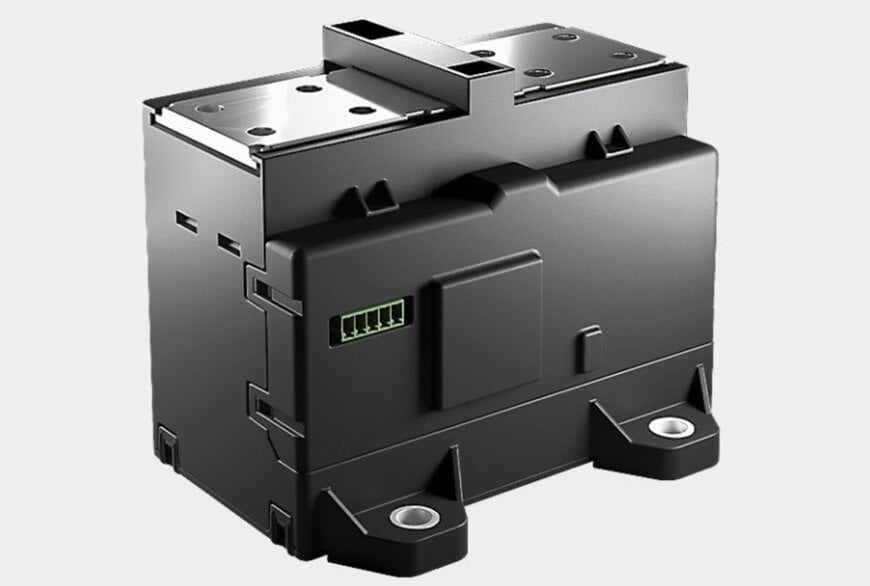
Schaltbau is commencing series production of the C330 megawatt charging contactor, a bi-directional direct current switching device engineered for high-power commercial mobility applications. The hardware facilitates rapid energy transfer for heavy-duty electric vehicle fleets, energy storage systems, and photovoltaic arrays, aligning with the stringent power delivery requirements of modern logistics operations.
Mitigating Thermal Loads in Megawatt Energy Transfer
The hardware is designed specifically for Megawatt Charging System (MCS) infrastructure, enabling commercial transport operators to recharge battery-electric trucks during standard driver rest periods. The Eddicy C330 functions as a single-pole, bi-directional direct current contactor rated for voltages up to 1,500 V and continuous current loads of up to 3,000 A. To mitigate the extreme thermal output generated at these power levels, the device utilizes silver contact pills and an internal mechanical architecture that achieves a contact resistance of just 40 micro-ohms. This low resistance mathematically reduces internal heating during high-current flow, thereby decreasing parasitic power losses and minimizing external cooling requirements at the charging station.
Arc Suppression and Short-Circuit Fault Tolerance
High-voltage direct current circuits pose significant risks of electrical arcing during the connection and disconnection phases. The C330 addresses this physical constraint through an open-air-isolation concept featuring a permanent magnetic arc blow-out mechanism. The hardware separates the contact systems responsible for initial switching from those handling continuous current, shielding the main power path from arc-induced material degradation. Under severe failure conditions, the contactor is engineered to withstand short-circuit currents up to 30,000 A for a duration of 5 milliseconds without experiencing structural rupture or inflicting collateral damage on adjacent infrastructure components.
Integration into the Automotive Data Ecosystem
By enabling stable, high-availability charging infrastructure, the contactor supports the broader automotive data ecosystem, allowing fleet operators to synchronize vehicle telemetry, route planning, and grid-level charging schedules without the variable of unanticipated hardware downtime. Helmut Pusch, CEO of Schaltbau GmbH Group, stated that the contactor allows infrastructure developers to scale high-power systems that safely manage the necessary energy transfer required for commercial fleets, ultimately improving asset utilization and lowering the total cost of ownership.
The hardware is undergoing validation for CE, CCC, and UL certifications, with regulatory approval anticipated by September 2026. The technology will be exhibited at The Battery Show Europe in Stuttgart from June 9 to 11, 2026, and at the Power2Drive event in Munich from June 23 to 25, 2026.
Additional Context
This section details technical specifications and competitive benchmarking not included in the original news release.
In the high-voltage direct current switching market, contactors must handle continuous thermal loads while ensuring absolute arc suppression to prevent catastrophic hardware failure. Traditional sealed contactors from standard industrial manufacturers often utilize hermetically sealed, gas-filled chambers to extinguish electrical arcs, typically reaching maximum continuous current ratings of 500 A to 1,000 A. The emerging Megawatt Charging System standard, which dictates operating parameters up to 1,250 V and 3,000 A (yielding up to 3.75 megawatts of charging power), exceeds the thermal capacity of standard gas-filled units. By achieving a 3,000 A continuous rating with an open-air permanent magnet blow-out design, the C330 establishes a distinct benchmark for contact resistance at 40 micro-ohms. This specification allows charging infrastructure providers to eliminate complex secondary liquid-cooling loops directly attached to the contactor housing, simplifying the internal thermal management of megawatt-class dispensers compared to legacy high-voltage relays.
Edited by Aishwarya Mambet, Induportals Editor, with AI assistance.
www.schaltbau.com
