
www.auto-innovations.net
19
'26
Written on Modified on
Resource-Efficient Painting Technology and SCADA Integration in Automotive Manufacturing
Volkswagen Autoeuropa implements a networked plant architecture from Dürr to increase process efficiency and reduce energy consumption in vehicle painting.
www.durr.com
With a production volume of over 230,000 vehicles in 2024, the Volkswagen Autoeuropa plant in Palmela, Portugal, reached its capacity and infrastructural limits. To prepare for upcoming model launches, the site required an additional painting line. The technical challenge consisted of aligning the new capacity with strict CO₂ reduction targets while unifying a fragmented software landscape, as several isolated paint shops with different control systems were already operating at the site.
Application Technology for Resource-Saving Coating
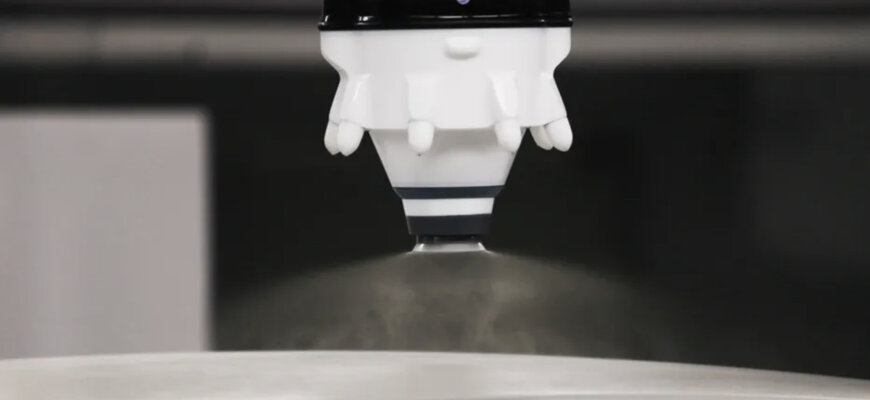
To make the clearcoat process more efficient, the company integrated a high-speed rotary atomization system featuring 2x2K technology, provided by Dürr. This specific configuration was selected to apply both glossy and matte clearcoats using a single applicator. This consolidation minimizes flushing agent losses during product changeovers.
The employed atomizer operates on a high transfer efficiency principle, achieving application efficiencies of up to 90%. Through optimized operating parameters, as well as an adapted bell cup and shaping air ring system, operation at a reduced rotational speed and decreased painting distance becomes possible. The requirement for shaping air drops by 30%. This leads to a measurably lower clearcoat consumption per car body and reduces the energy demand for cabin air conditioning due to decreased overspray.
Electrical Drying for Emission Reduction
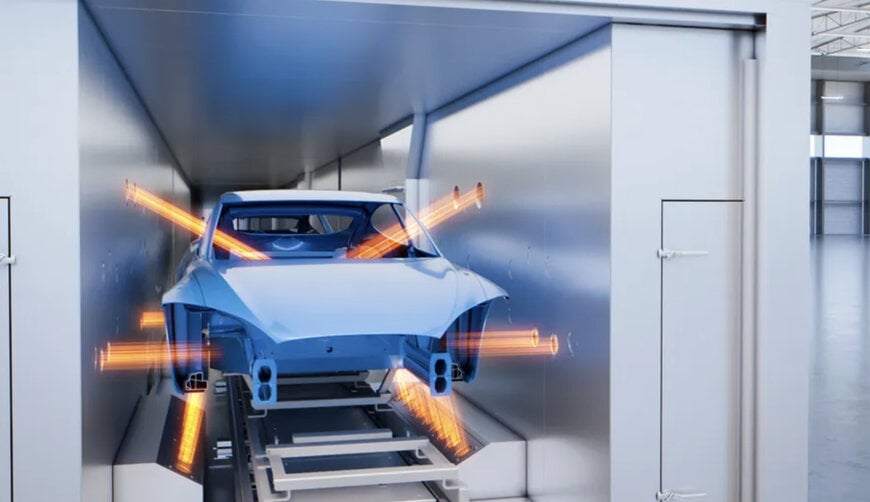
An electrically heated continuous drying system utilizing stop-and-go operation was implemented for body drying. The facility is designed to specifically heat the bodies of electric vehicles. Demand-based temperature control lowers the overall energy consumption of the process stage, resulting in shorter drying times and a direct reduction in local CO₂ emissions.
Centralized SCADA Architecture
In parallel with the physical plant technology, the system supplier installed an overarching software architecture. The new SCADA system networks the new facility with two existing buildings: the main paint shop and the separate bi-color facility for roof painting. The software integration involved migrating third-party systems and upgrading older versions to a unified control platform.
"With the cross-plant software solution, we bring together three independent paint shops with different initial technological situations. One system instead of three, one user interface instead of several, and full transparency over all processes make production significantly more flexible and efficient," explains Felix Losch, Senior Manager Digital Products at Dürr.
Project Execution and Infrastructure
In addition to the core painting technology, the overall project includes an offline measuring cell, the paint mixing room, the necessary work platforms, and the internal conveyor technology. The scheduling of the installation is strictly coupled with the production ramp-up of a new vehicle model.
"The start of the paint shop is linked to the market launch of a new model. This requires precise planning and close coordination across all construction phases," summarizes Marcus Treppschuh, Senior Vice President Sales & Marketing at Dürr, regarding the project conditions. The implementation of all construction phases is expected to be completed by mid-2027.
Edited by Maria Brueva, Induportals editor – adapted by AI.
www.durr.com
